


















.svg.png?height=48&name=Zoho_CRM_(application).svg.png)






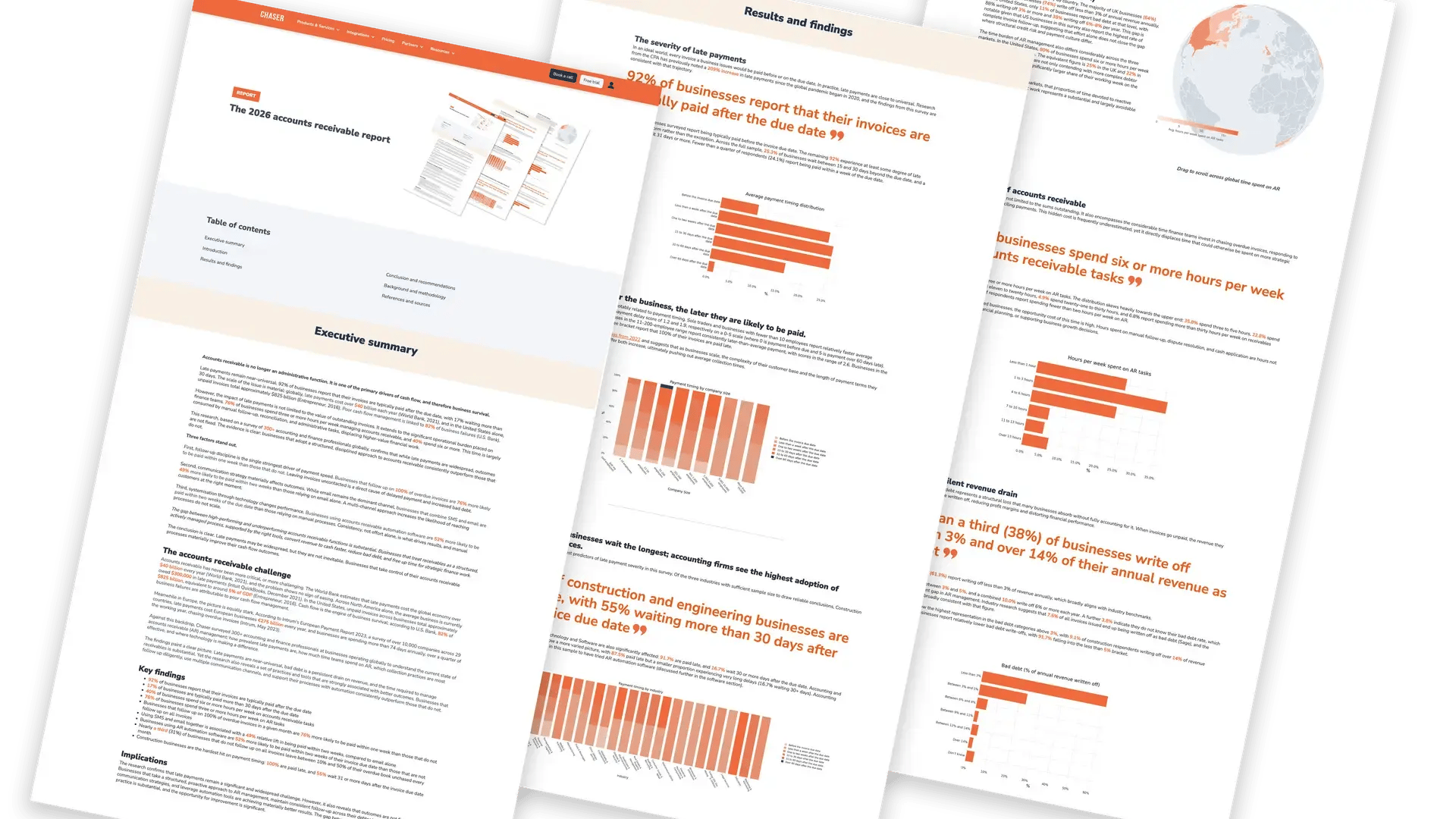

According to Chaser's 2026 AR Report, 92% of businesses report their invoices are typically paid after the due date, and a portion of those accounts will only move when someone calls.
Most customers pay after one or two reminders, and a well-timed sequence handles the majority of overdue invoices without anyone having to pick up the phone.
But if you receive no favourable response after 3 chasing emails or you find yourself dealing with a particularly difficult customer, a phone call will help them see the reality of the situation.
Below are 11 scripts covering the typical collection call scenarios B2B finance teams encounter most often and how to get paid with them.
Jump straight to the one you need:
- They forgot to pay
- They claim cash flow issues
- They haven't received the invoice
- They dispute the charge
- They say they're busy
- They promised payment last week, but it never arrived
- You can't get past the gatekeeper or the wrong AP contact
- A repeat late payer who always pays eventually
- "We're waiting on our own customer to pay us first"
- They've gone silent after agreeing to pay
- Final call before handing over to recovery
You can also skip the talking point and watch Chaser's own credit control specialists execute collection calls live with even more takeaways to steal. Saving your space on a 30-minute webinar.
Whether you've received a partial payment or no money at all, you must not be afraid to chase up clients.
Related: How often should you chase customers to pay their invoices [Latest AR Data]
Collection call scripts for every overdue-invoice scenario
These sample scripts can help guide your collection calls, allowing for a natural conversation while still addressing the outstanding debt. Use the following scenarios to structure your calls effectively:
Script 1: They forgot to pay
Hey, [Customer's Name], it's [Your Name] from [Your Company]. How's it going?
Got a sec to chat?
I'm calling about invoice [Invoice Number] for [Amount Due] that was due on [Due Date]. Looks like we haven't received that payment yet — just wanted to make sure it hadn't slipped through the cracks.
[Wait for their response.]
[Acknowledge their response and allow them to express their thoughts.]
So, when can we expect that payment to come through?
Can I count on you to send it by [Agreed Date]?
Just to be clear, you'll send the [Amount Due] by [Agreed Date], right?
Thanks for your time today, [Customer's Name]. Really appreciate your help!
Script 2: They claim cash flow issues
Intro: "Hi, [Customer's Name], this is [Your Name] from [Your Company]. Is this a good time for a quick chat?"
Verify: "I'd like to discuss invoice [Invoice Number] that was due on [Due Date]."
State facts: "I see that the payment of [Amount Due] hasn't come through."
Pause: [Wait for their explanation.]
Listen: [Be attentive to their concerns about cash flow.]
Negotiate: "I completely understand that cash flow can be tight. Would it be possible for us to discuss a payment plan that works for you?"
Commit: "Can we agree on a smaller payment today and then the balance later?"
Summarise: "So, we'll do [reiterate payment plan or agreement]."
Close: "Thanks for chatting, [Customer's Name]. I appreciate your willingness to work together on this."
Script 3: They haven't received the invoice
Intro: "Hello, [Customer's Name], this is [Your Name] from [Your Company]. I hope you're doing well."
Verify: "Is now a good time for us to talk?"
State facts: "I'm reaching out about invoice [Invoice Number], which was due on [Due Date]."
Pause: [Leave space for them to respond.]
Listen: [Acknowledge their indication that they haven't received the invoice.]
Negotiate: "I'd be happy to resend the invoice right away. Would you please confirm the best email address for you?"
Commit: "Can we set a date for when you expect to process this payment once you receive it?"
Summarise: "To confirm, I'll resend the invoice, and we agreed to check back on [Agreed Date]."
Close: "Thank you, [Customer's Name]. I appreciate your prompt attention to this."
Script 4: They dispute the charge
Good morning/afternoon, this is [Your Name] from [Your Company]. May I speak with [Customer's Name]?
[If connected with Customer's Name]:
"Thank you for taking my call. I am calling to discuss the outstanding invoice [Invoice Number] with a balance of [Amount Due].
I understand there may be a dispute regarding this invoice. Could you please outline the specific concerns prompting this dispute?
[Actively listen and acknowledge their dispute.]
I would like to understand your concerns thoroughly. To ensure an accurate resolution, I will need to review the details with my team. May I follow up with you once I have completed this review?
To recap, I will investigate this matter and contact you again by [Agreed Date].
Thank you for bringing this to my attention, [Customer's Name]. I appreciate your patience as we work to resolve this."
Script 5: They say they're busy
Intro: "Hello, [Customer's Name], this is [Your Name] from [Your Company]. How's your day going?"
Verify: "Is this a brief moment for us to discuss your outstanding invoice?"
State facts: "I'm calling about invoice [Invoice Number], which was due on [Due Date]."
Pause: [Wait to see if they mention being busy.]
Listen: [Acknowledge that they're pressed for time.]
Negotiate: "I understand you're busy. Would it be easier if I call you back at a more convenient time?"
Commit: "What would be a better time for you to discuss this?"
Summarise: "So, I'll follow up with you on [Agreed Date/Time] to discuss the payment."
Close: "Thanks for your time today, [Customer's Name]. I look forward to our next chat!"
Script 6: They promised payment last week, but it never arrived
Intro: "Hi, [Customer's Name], this is [Your Name] from [Your Company]. I hope you're well!"
Verify and State Purpose: "Is now a convenient time to chat? I'm following up on your recent commitment regarding invoice [Invoice Number], which was due last week."
Pause & Listen: [Allow them to share their situation and explain why the payment hasn't come through.]
Negotiate: "I understand that things can come up unexpectedly. Can we set a new payment date together?"
Commit & Summarise: "Can I mark it down to have the payment completed by [New Agreed Date]? So, we've agreed that you'll send the payment by [New Agreed Date]."
Close: "I appreciate your attention to this matter, [Customer's Name]. Thank you for speaking with me today!"
Script 7: You can't get past the gatekeeper or the wrong AP contact
Intro: "Hi, [Customer's Name], this is [Your Name] from [Your Company]. I hope you're well."
Verify: "Could you help me get in touch with the right person to discuss an outstanding invoice?"
State facts: "I'm calling about invoice [Invoice Number] for [Amount Due], which was due on [Due Date]. I want to make sure it reaches the right person in accounts payable."
Pause: [Wait to hear who answers and whether they're the right contact.]
Listen: [If they're not the right person, acknowledge this politely and ask for guidance.]
Negotiate: "Would you be able to point me in the right direction? I'd love to speak with [Accounts Payable Contact] if possible. Is there a direct line or email I could use?"
Commit: "If it's easier, I can send the invoice details to [confirmed email address]. Can I confirm that's the best route?"
Summarise: "So, I'll follow up with [AP contact's name] directly at [contact details], and they should be expecting [Invoice Number] for [Amount Due]."
Close: "Thank you so much for your help, [Gatekeeper's Name]. I really appreciate you pointing me in the right direction!"
Script 8: A repeat late payer who always pays eventually
Intro: "Hi, [Customer's Name], this is [Your Name] from [Your Company]. Hope you're keeping well."
Verify and State Purpose: "Is now a good time for a quick catch-up? I'm calling about invoice [Invoice Number] for [Amount Due], which was due on [Due Date]. I notice we've had a few invoices run a little past their due date recently."
Pause & Listen: [Give them space to respond and acknowledge the pattern without blame.]
Negotiate: "I completely understand how busy things can get. Would it help to set up a more predictable arrangement going forward? We could agree on a regular payment date each month that works for your cycle, or even look at setting up a direct debit so it takes the admin off your plate."
Commit & Summarise: "So, let's agree that [Amount Due] from invoice [Invoice Number] will be settled by [Agreed Date], and going forward, we'll look at putting a standing arrangement in place. I'll drop you an email today to confirm the details."
Close: "Thanks for being so open about this, [Customer's Name]. I really appreciate it, and I look forward to making the process smoother for both of us."
Script 9: "We're waiting on our own customer to pay us first"
Intro: "Hi, [Customer's Name], this is [Your Name] from [Your Company]. Hope you're doing well."
Verify and State Purpose: "Is now a good time to talk? I'm calling about invoice [Invoice Number] for [Amount Due], which was due on [Due Date]. I wanted to check in and see if there's anything we can do to help move things along."
Pause & Listen: [Allow them to explain their situation — they may be waiting on payment from their own customer before they can pay you.]
Negotiate: "I understand that kind of knock-on effect is a reality for a lot of businesses right now, and I appreciate you being upfront with me. While I completely sympathise, I do need to keep [Your Company]'s cash flow moving too. Is there any chance we could agree on a partial payment today to keep things ticking over, with the balance to follow once your payment comes in?"
Commit & Summarise: "So, you'll send [Partial Payment Amount] by [Agreed Date], and we'll expect the remaining [Balance] by [Later Agreed Date]. I'll send over a quick email to confirm that, so we both have it in writing."
Close: "Thank you for working through this with me, [Customer's Name]. I really do appreciate your honesty, and I hope your payment comes in soon. Speak soon!"
Script 10: They've gone silent after agreeing to pay
Intro: "Hi, [Customer's Name], this is [Your Name] from [Your Company]. I hope you're well."
Verify and State Purpose: "Is now a convenient time to chat? I'm following up on invoice [Invoice Number] for [Amount Due]. When we last spoke on [Date of Previous Contact], we agreed the payment would be sent by [Previously Agreed Date], but I haven't seen it come through yet."
Pause & Listen: [Allow them to explain what's happened since the last conversation.]
Negotiate: "I understand things don't always go to plan. Can we set a new firm date together so we can get this resolved? I want to make sure we find something that works for both of us."
Commit & Summarise: "So, we've agreed that [Amount Due] will be sent by [New Agreed Date]. I'll send a follow-up email today confirming that, along with the payment details, so everything's easy to find at your end."
Close: "Thanks for taking the time to speak with me today, [Customer's Name]. I really appreciate it, and I'll look forward to seeing the payment come through by [New Agreed Date]."
Script 11: Final call before handing over to recovery
Intro: "Good morning/afternoon, this is [Your Name] from [Your Company]. Am I speaking with [Customer's Name]?"
Verify and State Purpose: "Thank you for taking my call, [Customer's Name]. I'm calling regarding invoice [Invoice Number] for [Amount Due], which is now significantly overdue. I want to be transparent with you about where things stand."
State facts: "Despite our previous attempts to resolve this, including [number] emails and [number] calls, we haven't been able to reach an agreed resolution. The invoice has now been outstanding for [Number of Days] days."
Pause & Listen: [Give them a genuine opportunity to respond.]
Negotiate: "I want to give you every opportunity to resolve this before we move to the next stage. If there's something we haven't yet discussed or a way we can work through this together, I'm very much open to that conversation."
Commit & Summarise: "If we're unable to agree on a resolution today, our next step will be to issue a formal final demand in writing, followed by referral to our debt recovery service. To be clear, I'd much prefer to resolve this directly with you. Is there anything we can do to close this out today?"
Close: "Thank you for your time, [Customer's Name]. I'll be in touch shortly to confirm next steps, but I genuinely hope we can find a way to resolve this before it goes further."
These scripts aim to foster constructive communication while clearly addressing the need for payment. But, in essence, they only give you the words to say. Preparation, the right contact, tone, and follow-through are what really convert the call to cash. Consistency and a system matter as much as the conversation itself.
Collection call tips that lift your call success
Prepare for the call
Review the customer's last 3 invoices before calling, and look for patterns: Do they typically pay 15 days late? Have they negotiated payment plans before? This history determines whether you start with a gentle reminder or dive straight into payment plan options.
Before you dial, have all the necessary information in front of you:
- Invoice number
- Goods/services the invoice is for
- Invoice due date
- Number of days overdue (if applicable)
- Notes of communication had so far
- Who to talk to (or if you don't know, ask for Accounts Payable)
Keep in mind that the phone call isn't just to make customers feel bad because they haven't paid. In most cases, you want to achieve one of three things:
- Resolve any disputes
- Establish an expected payment date
- Remove any hurdles to payment
Master tone and timing best practices
Mid-morning (10–11 AM) and early afternoon (2–3 PM) yield the highest contact rates because decision-makers are typically available after morning meetings but before end-of-day rushes. Avoid Mondays (planning day) and Fridays (week wrap-up).
Aim for a professional and empathetic yet firm tone to facilitate effective communication. It's crucial to actively listen to what the customer is saying, as this demonstrates respect and understanding.
Document and plan follow-up immediately after the call
After using any collection call script, be sure to make a note of the date, time, who you spoke with, and what was said or agreed upon. This way, you've noted all of the necessary information if you need to set up a payment plan or contact a debt collection agency to collect your outstanding debt.
Unfortunately, in some cases, further email chasing or phone calls may be necessary, and being able to refer back to what was previously agreed and when can be key in keeping the customer on track to pay, both now and in the future. This holds them more accountable and ensures they pay invoices promptly. You must send them a final demand if they still do not pay.
Once the customer pays, don't forget to thank them for paying. And if they're starting to develop a trend as a late payer, try adjusting your email chasers going forward to better your chances of being paid on time in the future.
Chaser logs all call activity (recordings, communication history, and agreed next steps) automatically, so the whole team has shared visibility over every account without relying on individual notes.
Stay professional on collection calls
For a UK B2B creditor chasing its own trade invoices, the consumer-collection laws that govern debt collection agencies (the FDCPA in the US, ACMA regulations in Australia) generally do not apply. That said, professional and courteous conduct matters. A few practical rules to follow:
- Keep communications factual and calm, and avoid implicit threats such as "if you don't pay, things will get much worse for you"
- Don't discuss the debt with third parties beyond what's necessary to reach the right contact
- Call during sensible business hours (generally 8:00 AM–9:00 PM on weekdays)
- Inform the customer if the call is being recorded
For teams chasing overseas customers or dealing with consumer-adjacent situations, the applicable rules vary. If that describes your situation, take specific advice for your region rather than relying on general guidance.
Learn common objection handling techniques for collection calls
In handling objections, it's crucial to emphasise empathy and firmness. Here are some common objections and how to address them:
- When the customer says, "The cheque's in the post," respond with, "I understand, but can we confirm a payment date so I know when to expect it?"
- When the customer says, "I haven't received the invoice," respond with, "Let me resend it now to ensure you have all the details."
- When the customer says, "I have cash flow issues," respond with, "I completely understand that these things happen. Can we work out a payment plan that fits your current situation?"
- When the customer says, "I'm disputing the charge," respond with, "I'd like to hear your concerns. Let's discuss this further to resolve it."
- When the customer says, "I'll pay when I can," respond with, "I understand times are tough. Can we figure out a fixed date that works for you?"
Automate your collection calls with Chaser
Manual collection calls consume 2–3 hours weekly for most businesses. For your highest-priority accounts, the call you make is too important to leave to chance. For everything else, Chaser's auto-call feature eliminates this burden by automatically dialling overdue accounts and playing personalised messages, freeing your team to handle only the conversations that require negotiation. Try Chaser auto-call free for 10 days and simplify your collection process today.
FAQs
An effective collection call script should include the following essential structure:
- Intro: Greet the customer warmly and introduce yourself.
- Verify: Confirm the identity of the person you are speaking with.
- State facts: Clearly communicate the outstanding balance, invoice number, and due date.
- Pause: Allow the customer time to respond or ask questions.
- Listen: Actively listen to their concerns or reasoning.
- Negotiate: Discuss potential repayment plans or solutions.
- Commit: Secure a commitment regarding the payment date.
- Summarise: Recap the conversation and confirm what was agreed upon.
- Close: Thank them for their time and summarise the next steps.
Additionally, adhere to best practices such as preparation, professionalism, maintaining empathy while being firm, and documentation of the conversation.
Start by introducing yourself and your company, then state the invoice number, amount, and how overdue it is. Keep the opening factual and calm, pause to let the customer respond, and focus on reaching a specific outcome (a payment date, a partial payment, a payment plan, or a dispute that's moving toward resolution). End every call by confirming what was agreed and let the customer know you'll follow up in writing.
In a B2B context, a typical collection conversation opens with the caller identifying themselves and the reason for the call, states the outstanding invoice details clearly, and then listens. The customer usually falls into one of a few categories: they've forgotten, they have a cash flow issue, there's a dispute, or they're avoiding. The conversation then moves toward a specific resolution and closes with both parties clear on what happens next.
The 7-7-7 rule is a US consumer-collection call frequency guideline introduced under Regulation F of the FDCPA. It limits debt collectors to seven calls per week to a consumer about a specific debt, and prohibits calling within seven days of a conversation. It applies to consumer debt collection in the US and does not apply to UK B2B trade credit control, where a business is chasing a debt owed to it by another business on its own invoices.
Typically, a successful collection call should last between 5 and 10 minutes.
Mid-morning or early afternoon, during regular business hours, is generally the best time to reach clients.
Yes, but be sure you comply with local regulations regarding call recording permissions. In the UK, always inform the customer if the call is being recorded.

%20-%20Collection%20effectiveness%20index_%20optimize%20your%20debt%20recovery.webp)