



















.svg.png?height=48&name=Zoho_CRM_(application).svg.png)







Every customer you take on represents a certain level of risk, and that risk is compounded if you plan to offer them a line of credit. Before you agree to payment terms with any new customer, you need to know whether they are likely to pay you on time.
A customer credit check answers that uncertainty by looking at a business's financial and payment history and turning it into a decision: extend credit, extend it with limits, or wait.
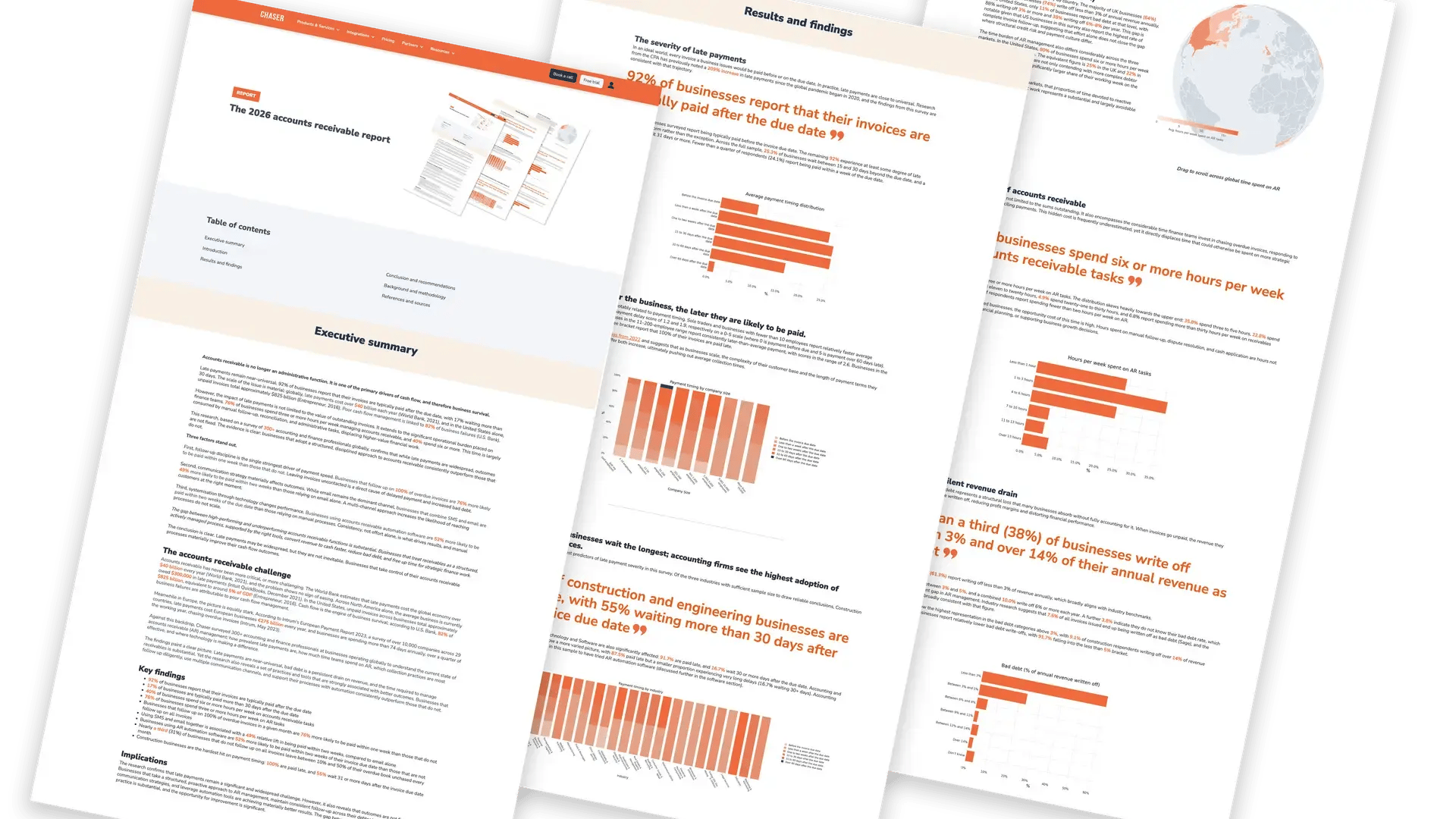
According to Chaser's 2026 Accounts Receivable Report, 92% of businesses were paid after the due date they had agreed to, and 90% of UK businesses reported late payment specifically. A credit check will not eliminate that risk, but it tells you which customers are carrying more of it before you extend their terms.
This guide walks through the process end-to-end: what to gather before you start, how to pull and read a credit report, what to request beyond the report itself, and how to turn the result into a credit limit and payment terms you can defend. It also covers the parts of the job a credit report will not do for you on its own.
What you need before you start
Before you commission a check, gather the basics on the business you are about to extend credit to:
- Full legal business name, not just the trading name
- Any trading or brand names it operates under
- Company registration number
- Names of the directors or business owners
Having these details ready before you start means the check runs against the right entity the first time, rather than stalling halfway through while you chase missing information from the customer. It also gives you a clean record of who you assessed and when, which is useful if the credit decision is ever questioned later.
How to credit check a customer, step by step
Five steps take you from a new customer's details to a credit decision: confirm who you are actually checking, pull the report, request what the report will not show you, weigh the result against your own risk tolerance, and set the limit.
Step 1: Confirm the legal entity you are checking
A credit check is only as good as the entity it’s run against. Using the details you gathered above, confirm the customer's full legal business name, company registration number, and the names of its directors, rather than relying on the trading name alone.
Run the check against the wrong legal name, or against an entity that has since changed structure, and the result tells you nothing about the business you are about to invoice. This step takes minutes, and skipping it is the most common way a credit check ends up checking the wrong company.
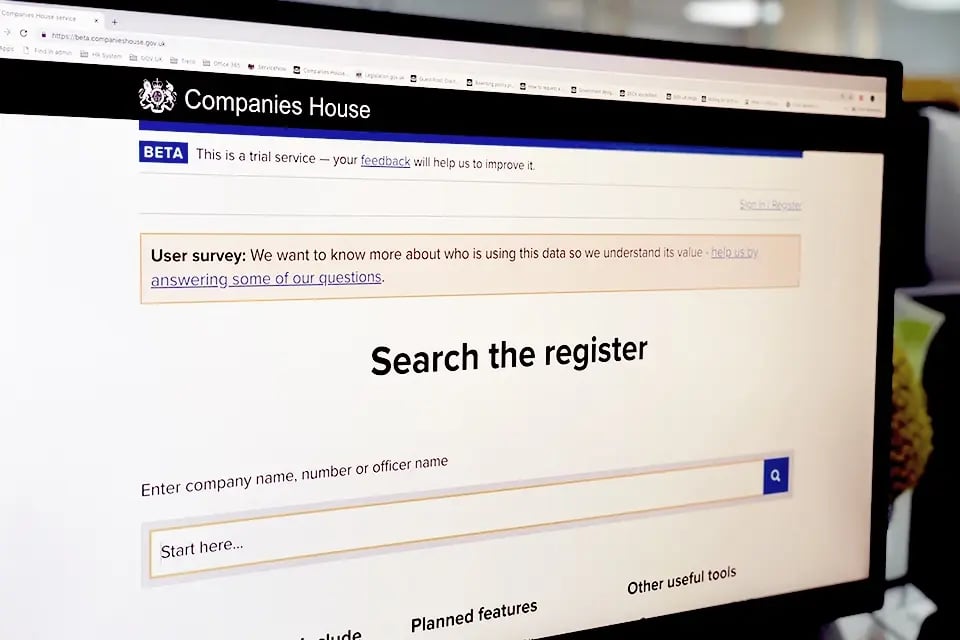
It’s also worth a quick check on the directors themselves. Companies House lets you search by director name, which shows every other company they have been listed against, including dissolved and insolvent ones. A director with a trail of failed companies behind them, sometimes called phoenix company activity, is a major warning sign that the entity check alone will not surface.
Step 2: Pull the credit report
For a UK- or Ireland-based customer, Companies House filings are free and public, and give you the basics: registered address and filing history, in addition to director details. But that’s only a starting point.
For a fuller view, a paid report from a commercial bureau such as Experian or Creditsafe adds a business credit score, payment history with other suppliers, and credit event history. Dun and Bradstreet is the equivalent bureau most commonly used for a US customer, and coverage and depth vary by region, so check what a given bureau actually reports on before you rely on it.
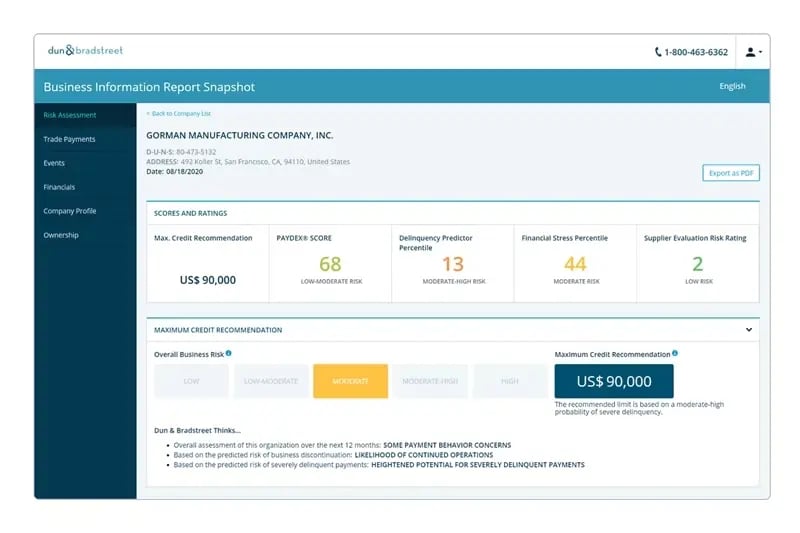
Different bureaus weigh and score businesses differently, so two reports on the same company will not always agree, and neither will necessarily match what you see once the customer is trading with you. Treat the score as one input rather than a verdict; see what counts as a good business credit score for a sense of where a given number actually sits.
A new or very small business may come back with a thin file, or no score at all, rather than a low one. Treat that as information. With no track record to weigh, tighter terms, a deposit, or a personal guarantee are the standard way to extend credit anyway, covered further in step five.
Step 3: Request what the report doesn’t carry
A bureau report alone doesn’t provide a full picture. Request two or three trade references directly from the customer (meaning other suppliers who already extend them credit) and follow up with those suppliers directly rather than taking the reference on trust.
Ask each customer the largest amount of credit they have extended, the customer's current balance, and whether any payment has been late or missed. A customer chooses which references to give you, so treat what you hear as a floor on their payment behavior.
Where the business is large enough to file them, request its filed or audited accounts too, and check which type you are looking at. Many small UK companies file micro-entity or abbreviated accounts at Companies House, which show a balance sheet and little else, no profit and loss, no real trading detail. That is not the same document as a full set of audited accounts, and it will not tell you as much as the name suggests.
Step 4: Read the score against your own risk tolerance
A credit score only means something once you measure it against the risk your business can absorb. A score that would rule out a customer requesting 90-day terms on large invoices might be acceptable for a customer on 30-day terms and smaller order values.
Two practical ways to size that risk: cap the credit you extend at a set percentage of the customer's net worth, as shown on the report; a common starting point is around 10%, or work out your likely exposure at any one time by multiplying the average order value by how many invoices could realistically be outstanding at once under your payment terms. Either gives you a number to test the credit limit against.
Connect the score to the invoice value and payment terms actually under discussion, not to the score on its own. For a full walkthrough of what each section of a report shows and how to weigh it, see how to read a company credit report.
Step 5: Set the credit limit and payment terms
The report and the references are inputs, while the credit limit and payment terms are the decisions they lead to. Every check should end here, for new customers and for existing ones asking for a limit increase.
Ultimately, your own risk tolerance and the size of the order the customer is actually asking for both factor into the result.
Not every check clears the bar for open credit, and that is a valid outcome, not a failure of the process. Where the result is weak, or the file is too thin to size a limit with confidence, the usual options are a shorter payment term, a deposit or part-payment upfront, cash on delivery, or a personal guarantee from a director, rather than an outright decline.
Reserve an outright no for cases where the red flags below are serious enough that no adjustment to terms would make the risk acceptable.
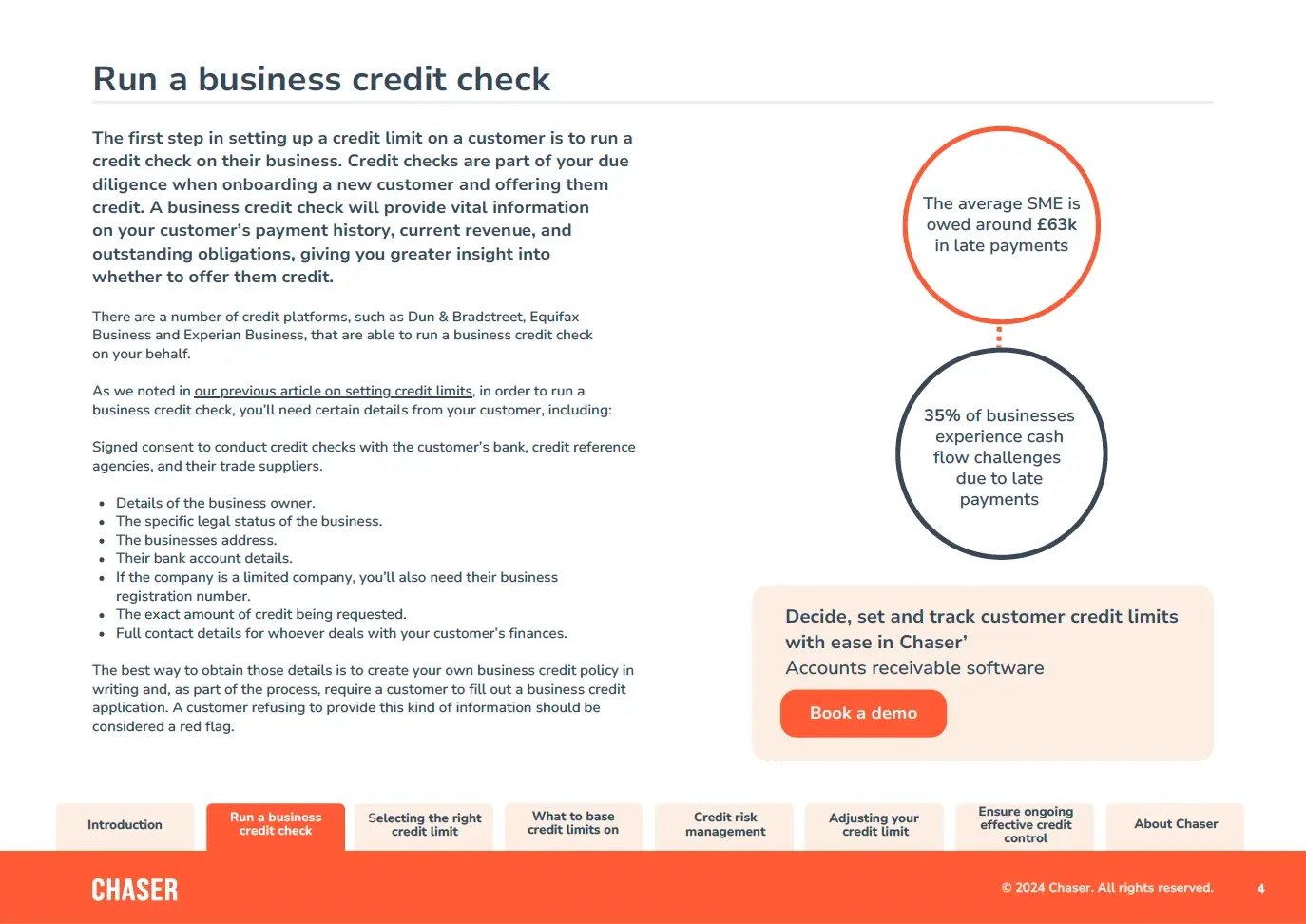
For a fuller walk-through of turning a credit result into a limit and terms, download the guide to setting B2B credit limits.
Credit check red flags you should look for before extending credit
A bureau report and a set of trade references cover most of the picture, but not all of it. Four further checks catch what the paperwork alone will not show you.
1. Industry reputation: Talk to contacts in the customer's industry, or to other suppliers beyond the formal trade references you requested in step three, about how the business actually pays in practice. This kind of informal check often surfaces a reputation before it shows up in any formal report.
2. The Prompt Payment Code: Check whether the customer has signed the Prompt Payment Code. Signing is a public commitment to pay within agreed terms, and it signals intent even where it carries no legal weight.
3. Public filings: Companies House shows filed accounts, filing history, and early signals of financial distress for UK-registered companies, free to search. For an Ireland-based customer, the equivalent register is the Companies Registration Office.
4. Non-financial warning signs: A customer who pushes hard against your standard payment terms during negotiation, or who is unusually eager to place a large first order, is telling you something a credit report cannot. Neither is a reason to walk away on its own, but both are reasons to look closer.
To run this same check on every new customer rather than ad hoc, set the steps down in a credit control policy. The credit control policy template gives you a starting structure for documenting your own customer-checking steps.
Keeping the check current after onboarding
A credit check at onboarding is a snapshot of a business at one point in time, not a guarantee of how it will behave for the life of the relationship. Ongoing monitoring is what catches a change in a customer's financial position after they are already trading with you.
Re-check existing customers periodically, particularly before agreeing to a credit limit increase. A fresh report helps you tell a one-off late payment apart from a genuine shift in payment behavior, and the same logic applies to monitoring your own key suppliers, not just your customers.
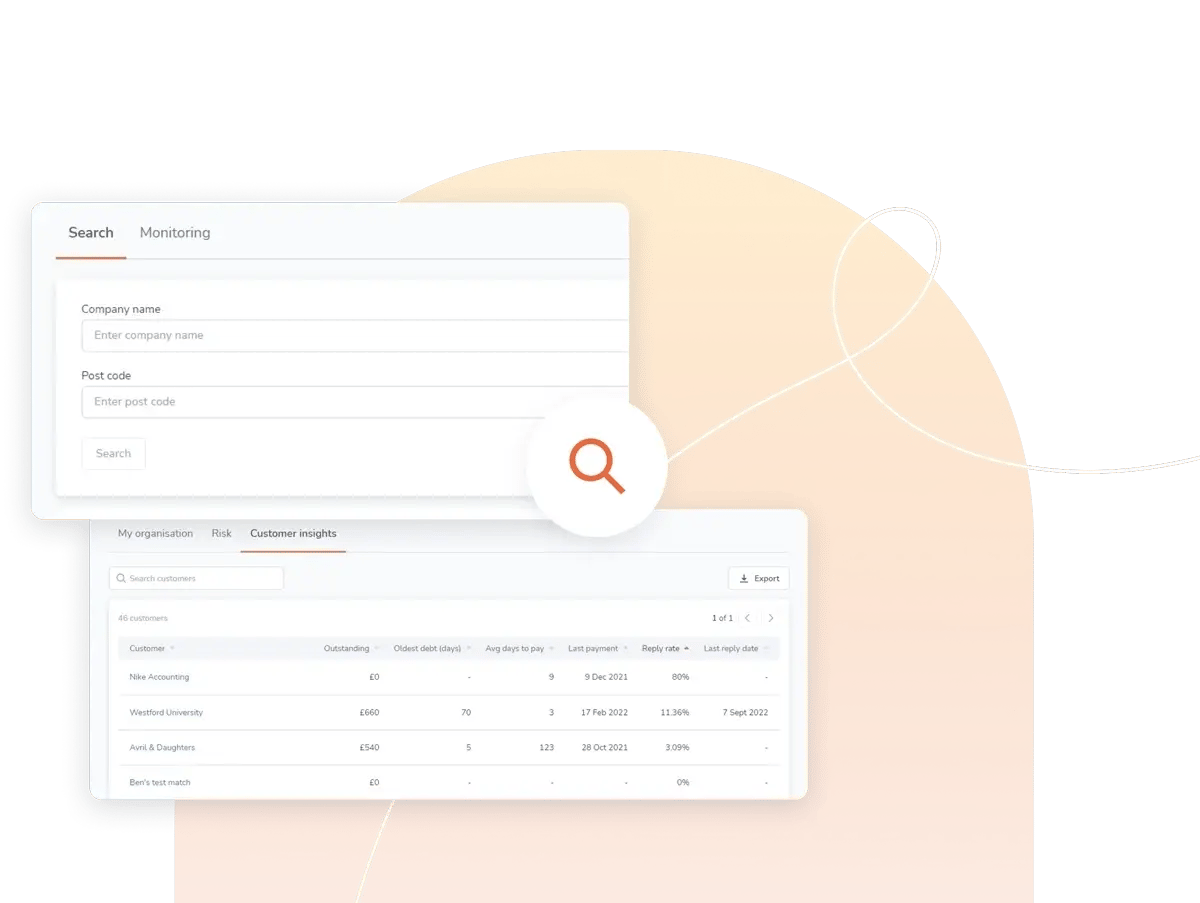
Once a customer is live, Chaser's credit monitoring and reports feature can run this check on an ongoing basis, flagging changes in risk without the team needing to manually re-run a report. The credit checking fact sheet covers what the feature shows and how it works.
Frequently asked questions