



















.svg.png?height=48&name=Zoho_CRM_(application).svg.png)







You have connected Chaser to your accounting system, built your reminder sequences, and given customers access to the payment portal. The automation is running. So why does your AR function still feel reactive?
Often the answer is not the tool. It is the accounts receivable policy underneath it. Chaser executes a collections workflow, but the workflow itself, who receives credit, on what terms, at what limit, and what happens when reminders are ignored, has to come from a written AR policy your team can follow and your auditors can verify.
This article covers what a structured receivables policy needs to include, where SMEs leave gaps, and how each element connects to a specific Chaser capability.
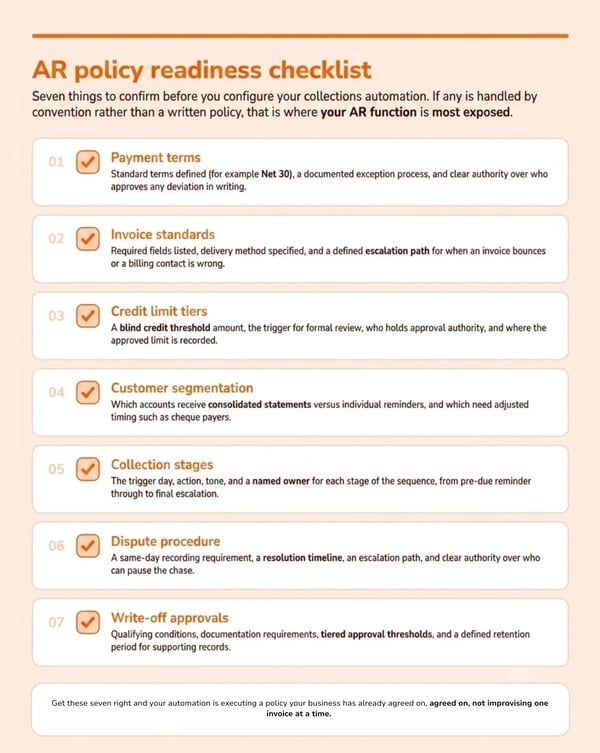
Fig. 1. AR policy readiness checklist: 7 things to confirm before you set up Chaser

The gap between automation and policy
Platforms like Chaser replace manual follow-up. They send reminders at the right time, in the right tone, with a link to pay, and they track who has responded. Every invoice that ages past its due date is working capital you cannot deploy, which is why slow receivables quietly erode the operating cash flow a growing business depends on.
What automation cannot do is make the upstream decisions: whether a customer should have received credit at all, what to do when a debtor goes silent at stage four, or whether a disputed invoice should pause the sequence or keep running while it is investigated.
Those decisions belong in a policy document. Without one, finance teams make them ad hoc, and the outcomes are inconsistent, undocumented, and hard to defend if a write-off ever faces management sign-off or audit scrutiny.
Credit terms and invoice standards
Any AR policy should first define your standard payment terms. For most SMEs trading on open account, this is Net 30 from invoice date. State it explicitly, specify what triggers an exception, and clarify who must approve that exception in writing before non-standard terms are offered.
The policy should also define what a valid invoice must contain. One missing a due date, a correct billing contact, or a payment link will generate disputes and delays Chaser cannot resolve. If invoices are issued from an automated sales order import, state who validates accuracy before delivery and what happens when one bounces.
Chaser's reminder sequences are triggered by the due date. If that date is wrong, every subsequent stage fires at the wrong time.
Credit limit management: two tiers that most SMEs skip
Open-account trading means extending unsecured credit: the customer receives goods or services before paying. Your policy needs to define how that credit is granted, maintained, and reviewed. Without it, sales and finance apply their own informal standards, and results become inconsistent.
Tier 1: The blind credit threshold
For lower-value relationships, most businesses operate a blind credit threshold: a maximum aggregate balance below which no formal review is required, provided the customer has a verified account, no prior bad debt history, and terms no longer than Net 30. This keeps standard orders moving without a review every time.
The threshold depends on your business model, average order value, and risk appetite. What matters is that it is written down, applied consistently, and reviewed periodically rather than left as an unspoken assumption.
Tier 2: Formal credit review
Above that threshold, a formal review is required before terms are extended or increased. A robust review includes a completed credit application, a commercial credit report from a recognized bureau such as CreditSafe or Dun & Bradstreet, and an assessment of the customer's order and payment history.
Specify who conducts the review, who approves the limit, and where it is recorded. Chaser is a suitable system of record, particularly if your configuration references the limit when processing orders or flags accounts that have exceeded available credit.
Approved limits should be reviewed at least annually to mitigate credit risk. Define what triggers an out-of-cycle review too, such as a material change in payment behavior or an order that would push an account well over its limit.
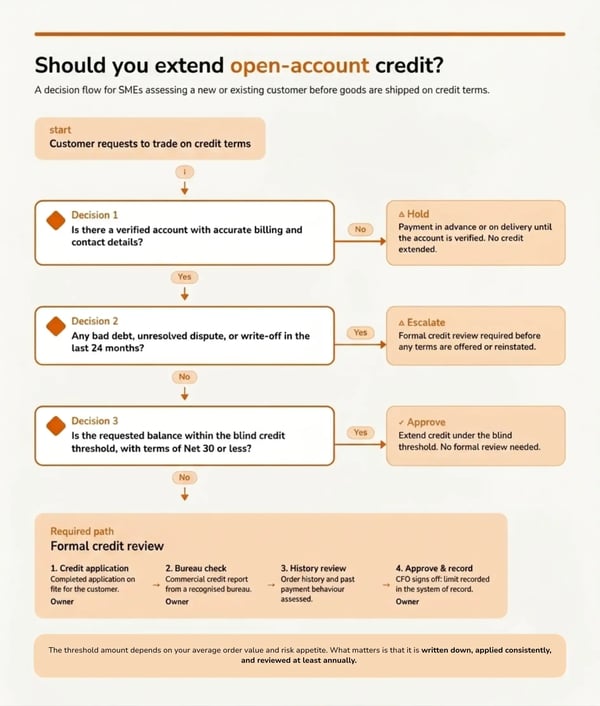 Fig. 2. Should you extend open-account credit? A decision flow for SMEs
The collections workflow: staging, segmentation, and escalation
Chaser's core value is sending the right reminder at the right time to the right person. But the sequence should reflect deliberate decisions about tone, timing, and escalation, not just the platform defaults.
Customer segmentation
Not all customers need the same schedule. High-volume accounts may respond better to a monthly consolidated statement than to individual reminders. Customers who pay by check may need an extended initial delay given clearing times. Your policy should identify these groups and how Chaser is configured for each.
Stage progression and escalation
A well-structured workflow moves through defined stages, each triggered by invoice age and escalating in tone and consequence. A typical structure looks like this:
|
Stage |
Trigger |
Action |
Owner |
|
1 |
7 days before due |
Friendly heads-up reminder |
Chaser (automated) |
|
2 |
1 day after due |
Courtesy reminder |
Chaser (automated) |
|
3 |
14 days overdue |
Polite reminder |
Chaser (automated) |
|
4 |
30 days overdue |
Further reminder |
Chaser (automated) |
|
5 |
45 days overdue |
Phone outreach; record expected payment date |
Collections Officer / AR Manager |
|
6 |
60 days overdue |
Senior escalation reminder (from CFO or Director) |
Chaser (automated) |
|
7 |
90 days overdue |
Formal legal demand letter |
Legal / CFO |
|
8 |
120+ days overdue |
Referral to licensed collection agency |
CFO / Management |
Each transition should have a named owner. When the policy is silent on who acts at stage five, everyone assumes someone else will, and no one does.
Define what happens at the end of the sequence too. If a customer reaches 120 days with no payment and no response, there must be a written framework for who approves referral to a collection agency, and on what basis.
.webp?width=600&height=600&name=AR_Collections_Workflow_8_Stages%20(1).webp)
Fig. 3. The 8-stage AR collections workflow: from invoice to recovery
Disputed invoices: pause, document, resolve
Disputes are the most common reason to pause a sequence. Chaser lets you tag invoices as disputed and stop or pause chasing for those accounts. Your policy should define when this happens and who is authorized to apply the tag.
A sound procedure covers same-day recording of the dispute with a reason noted, a target resolution date (typically 10 to 30 days), automatic notification to concerned staff, and an escalation path if it is unresolved beyond that window.
See marking invoices as disputed in Chaser in the Chaser help center.
Write-off approvals and bad debt thresholds
No AR policy is complete without a section on write-offs. A receivable becomes a bad debt candidate once collection is exhausted, through bankruptcy, non-response, business closure, or legal advice that recovery is not viable. Define when a receivable qualifies, the documentation required, and the approval thresholds needed before the journal entry is recorded.
A tiered approval structure is standard: write-offs below a defined threshold might need AR Manager approval, while larger amounts require CEO, CFO, or board sign-off. Whatever the thresholds, write them into the policy rather than deciding case by case, which invites inconsistency and audit risk.
Specify the supporting documentation too: the collection history from Chaser, any third-party confirmations such as a collection agency report or legal opinion, and a memorandum setting out the basis for the decision. Retain it, in some cases for five to seven years, to support any tax deduction claim. Chaser's collections page provides that audit trail when your team records notes and actions consistently.
What your AR policy should cover: a practical checklist
Before configuring Chaser's reminder sequences, confirm your AR policy addresses each of these:
- Payment terms: standard terms, exception process, who approves deviations
- Invoice standards: required fields, delivery method, bounce escalation
- Credit limit tiers: blind threshold, formal review trigger, approval authority, system of record
- Customer segmentation: statements vs. reminders, and who needs adjusted timing
- Collection stages: trigger days, action, tone, and named owner for each stage
- Dispute procedure: recording requirement, resolution timeline, escalation path, pause authority
- Write-off approvals: qualifying conditions, documentation, tiered thresholds, retention period
If any of these seven areas runs on convention rather than a written policy, that is where your AR function is most exposed.
Chaser works best when the policy is already there
Accounts receivable automation cuts manual effort and makes customer communication consistent. But the decisions above the automation, who gets credit, at what limit, on what terms, and what happens when reminders stop working, still need a written framework.
A good AR policy does not constrain your team. It gives them a reliable process, a clear escalation path when things get complex, and a documented basis for every decision touching a customer's credit position. Chaser is most effective when it executes a policy your business has already agreed on.
FACFO is an authorized Chaser partner that has implemented structured collections workflows across multiple organizations. If you would like support developing or reviewing your accounts receivable policy, or configuring Chaser to match it, our accounts receivable management team is available to help. Reach out anytime.
FAQs
.png)