

















.svg.png?height=48&name=Zoho_CRM_(application).svg.png)





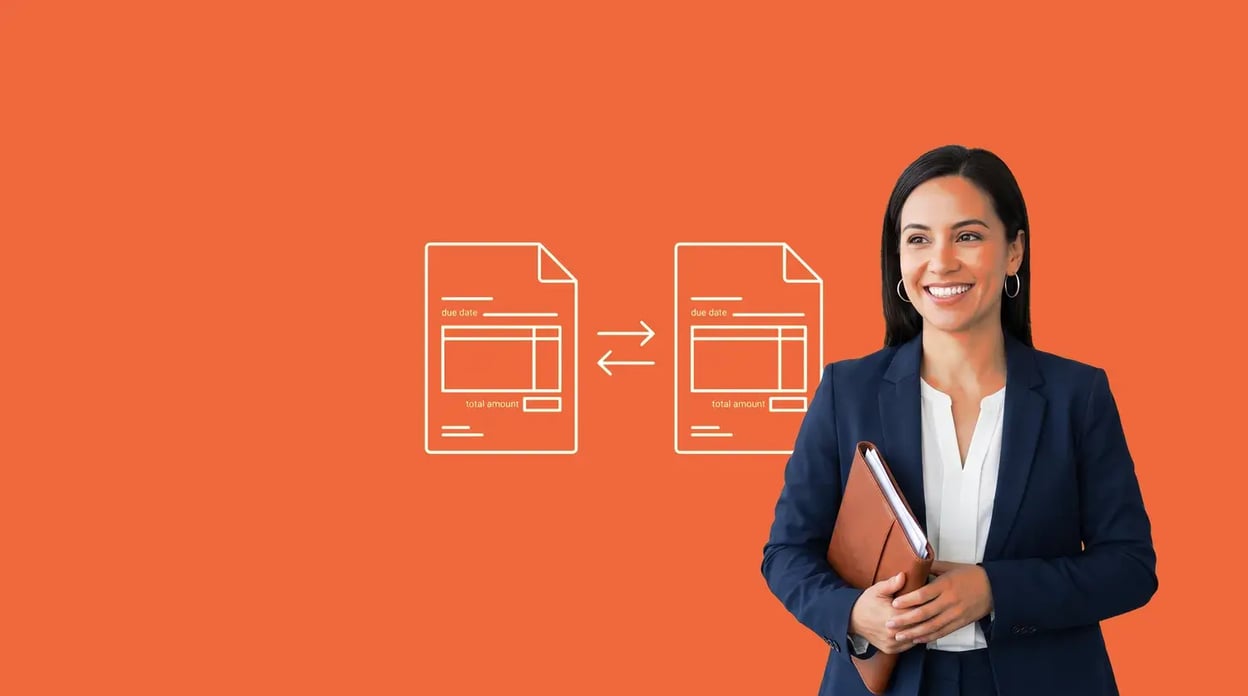
A sales invoice and a purchase invoice are usually the same document seen from opposite sides of a transaction. The seller issues it as a sales invoice, records it as revenue, and waits to be paid; the buyer receives the identical document as a purchase invoice, records it as a cost, and owes the payment. Which name you use depends only on whether you are the one getting paid or the one paying.
In short: you issue sales invoices and receive purchase invoices. Jump to the difference at a glance, how each side records it, where the rule breaks down, UK VAT invoice requirements, or invoice vs similar documents.
Sales invoice vs purchase invoice: the difference at a glance
| Sales invoice | Purchase invoice | |
|---|---|---|
| Whose term it is | The seller's | The buyer's |
| What it does | Requests payment for goods or services supplied | Evidences a cost and the obligation to pay it |
| Where it is recorded | Accounts receivable (money owed to you) | Accounts payable (money you owe) |
| Effect on VAT | Creates output tax owed to HMRC | Supports the input tax you reclaim |
| Also called | Invoice, VAT invoice, tax invoice | Bill, supplier invoice, vendor invoice |
| What you want | To be paid on time | To pay on the best terms available |
What is a sales invoice?
A sales invoice is the document a business issues to a customer to request payment for goods or services it has supplied. It records what was sold, in what quantity, at what price, and on what payment terms, and it is the trigger for recognizing the sale in your accounts. UK government guidance sets out what every invoice must include: a unique identifying number, your company name and address, the customer's name and address, a clear description of what you are charging for, the supply and invoice dates, and the amounts due.
From the moment it is issued, the sales invoice lives in your accounts receivable: it is money owed to you, and how quickly it converts to cash depends largely on how well it is followed up.
What is a purchase invoice?
A purchase invoice is the same kind of document from the receiving end: an invoice that arrives from a supplier for goods or services your business has bought. Accounting software usually calls it a bill. It enters your accounts payable as a liability, gets checked against the order and delivery (the three-way match), and is scheduled for payment within the supplier's terms.
For VAT-registered UK businesses the purchase invoice does double duty: it is the evidence HMRC requires for reclaiming the VAT you were charged. An invoice that is missing required fields, or is marked pro forma, cannot support a VAT claim until the supplier provides a compliant version.
One document, two sets of books
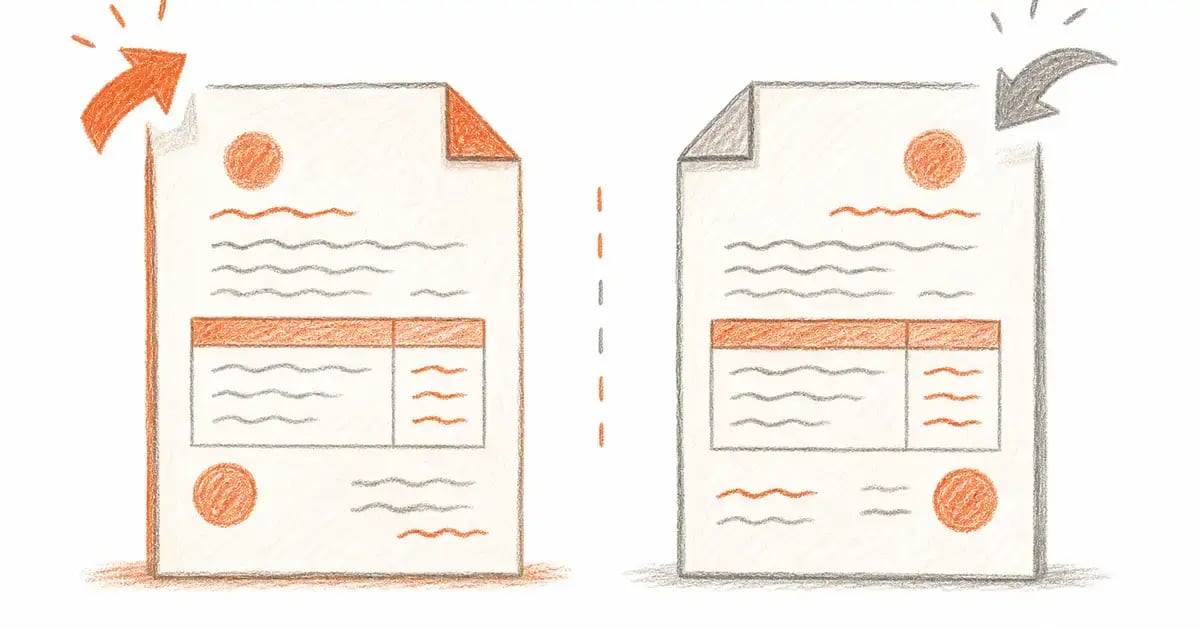
The clearest way to see the relationship is to follow one transaction into both companies' ledgers.
| Event | In the seller's books | In the buyer's books |
|---|---|---|
| Invoice issued / received | Debit accounts receivable, credit sales revenue, credit VAT output tax | Debit purchases or expense, debit VAT input tax, credit accounts payable |
| While unpaid | Sits in receivables; chased through credit control | Sits in payables; scheduled in the payment run |
| Payment made | Debit bank, credit accounts receivable | Debit accounts payable, credit bank |
| On the VAT return | Output tax declared to HMRC | Input tax reclaimed from HMRC |
Every line mirrors its counterpart. That symmetry is why reconciliation works: if your customer's payables ledger and your receivables ledger disagree, one of you has a missing or mis-entered invoice, which is exactly the discrepancy a statement of account is designed to surface.
Where the “same document” rule breaks down
Self-billing
Under a self-billing arrangement, the customer raises the invoice instead of the supplier, under a formal agreement. It is common in publishing royalties, construction, and agency work. The tax and accounting consequences are unchanged, but operationally the buyer creates the document and the supplier agrees not to issue their own.
Retail sales
Retailers selling to consumers do not have to issue VAT invoices; a till receipt or simplified VAT receipt stands in. The formal sales-versus-purchase framing only really matters between businesses.
Credit notes
When goods are returned or an invoice was wrong, the correction is a credit note, not a new invoice. It mirrors through both sets of books the same way, reducing the seller's receivable and the buyer's payable.
What a UK VAT invoice must include in 2026
For VAT-registered businesses selling standard or reduced-rated goods or services to other VAT-registered businesses, the invoice must meet the requirements of HMRC's VAT guide (Notice 700). A full VAT invoice shows: a unique sequential invoice number; the seller's name, address, and VAT registration number; the invoice date and the tax point, where different; the customer's name and address; a description of the goods or services with quantities and unit prices excluding VAT; the VAT rate and amount for each line; and the totals excluding and including VAT. Simplified invoices are allowed for supplies of £250 GBP or less including VAT.
Keep both sides of the paperwork. The Companies Act 2006 requires companies to keep adequate accounting records of all goods sold and purchased, and HMRC expects VAT invoices to be producible on request; six years is the standard retention practice that satisfies both.
Invoice vs purchase order, receipt, statement, and pro forma
Most confusion around sales and purchase invoices is really confusion between the invoice and its neighbouring documents.
| Document | What it is | How it differs from an invoice |
|---|---|---|
| Purchase order | The buyer's formal offer to buy, issued before supply | Comes before the transaction; an invoice comes after and requests payment |
| Receipt | Confirmation that payment was made | Proves settlement; an invoice proves the debt existed |
| Statement of account | A periodic summary of all invoices and payments on an account | Summarizes many transactions; an invoice documents one |
| Pro forma invoice | A preview of an intended sale, often for approval or customs | Not a demand for payment and not valid for VAT reclaim |
| Credit note | A reduction of a previously issued invoice | Decreases what is owed rather than creating a new obligation |
Managing both sides well
The buyer's side of invoicing largely runs on process: match, approve, pay to terms. The seller's side is where cash flow is won or lost, because a sales invoice only becomes money when the customer pays it. That is a follow-up problem: clear invoices, polite payment reminders before and after the due date, statements that keep accounts reconciled, and a quick route for resolving invoice disputes before they become excuses.
Credit control software automates that follow-up across every sales invoice you issue: businesses using Chaser reduce their days sales outstanding by an average of 10 days and save over 15 hours a week on manual chasing, with the platform connected to Xero, QuickBooks, Sage, or your accounting system in about five minutes.
Turn sales invoices into cash, faster
See how Chaser follows up every invoice you issue, politely and automatically, until it is paid.