


















.svg.png?height=48&name=Zoho_CRM_(application).svg.png)






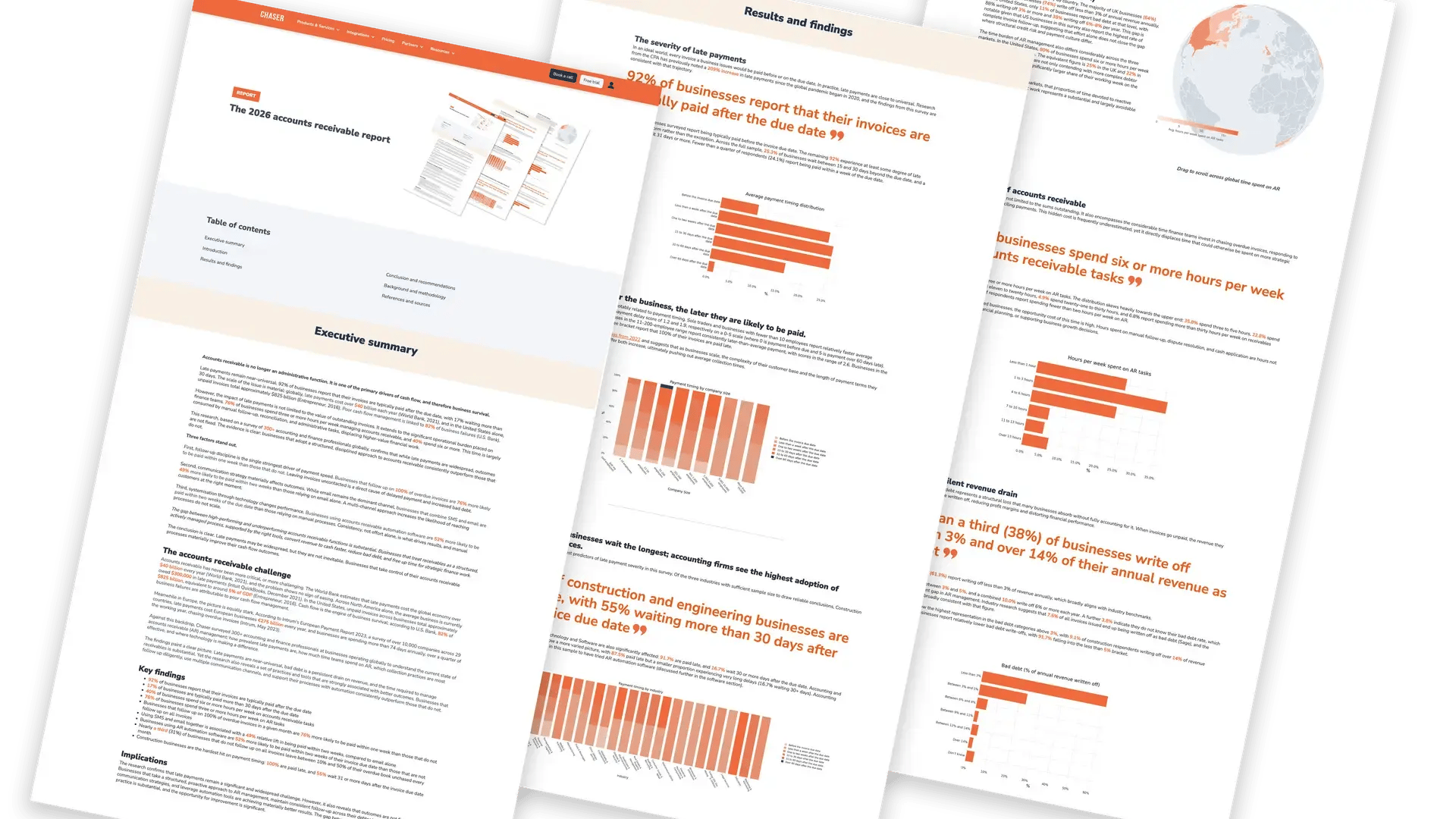

According to Chaser's 2026 Accounts Receivable Report, 92% of businesses are now paid after the due date, up from 87% in 2022, and 17% wait more than 30 days past terms. Poor cash flow management is also linked to 82% of business failures (U.S. Bank).
Most accounts receivable challenges have a compounding effect: a late payment strains cash flow, and cash flow pressure makes it harder to invest in the systems that would have prevented it in the first place.
Effective accounts receivable (AR) management addresses these costs at the source. Putting an efficient, holistic AR management system in place reduces payment times, prevents bad debt, and minimizes the chance of common payment roadblocks such as disputes and errors. This guide covers the 7 most common accounts receivable challenges, each paired with a concrete fix, to help you overcome the current late payment landscape.
Here are all 7 at a glance; each links to a full breakdown of causes and fixes below:
|
Challenge |
Business impact |
The fix |
|---|---|---|
|
Cash flow disruption, reduced liquidity, higher bad debt exposure |
Automated invoicing and reminders, sent on a consistent schedule, plus clear payment terms |
|
|
Delayed payment, damaged customer relationships, rework |
Accurate, automated invoicing and a defined dispute resolution process |
|
|
Hours lost matching payments by hand, delayed visibility into what has actually cleared |
Digital payment methods with automated matching and reconciliation |
|
|
Bad debt write-offs, credit extended to high-risk customers |
Ongoing credit checks and ongoing monitoring of payment behavior, not just a check at onboarding |
|
|
Cannot prioritize collections, no early warning on aging risk |
Real-time AR dashboards, aging reports, and DSO monitoring |
|
|
Wasted staff hours, compounding errors from legacy systems |
Modern AR software, staff training, and regular process reviews |
|
|
Missed follow-ups, slower payment, avoidable disputes |
Consistent, multi-channel contact across email, SMS, and phone |
1. Late payments and high DSO
The first and most impactful of the issues commonly found in inefficient AR processes is consistent late payment, and rising days sales outstanding (DSO) is usually the clearest sign that late payment has become a pattern. Doing nothing to solve late payment issues results in 50,000 businesses going bankrupt every year, so the stakes could not be higher.
Late payments have a significant impact on your business's cash flow. The resulting drop in liquidity stifles growth, reduces your ability to grasp opportunities, and can drive you into further debt.
What causes late payments and high DSO
Two of the most common causes for late payments include:
- Inefficient invoicing - Invoices that are sent late, incomplete, or with errors in the details slow the entire payment process down. More work hours then need to be spent fixing these issues, increasing the total cost of late payment.
- Lack of reminders - A consistent schedule of payment reminders is critical to getting your invoices paid on time. Assuming your invoice will make it to the correct person and will get paid without a well-placed reminder ignores the fact that 87% of businesses are consistently paid late.
The fix
Several easy-to-implement solutions can help your business avoid being one of the 50,000 businesses going bankrupt every year.
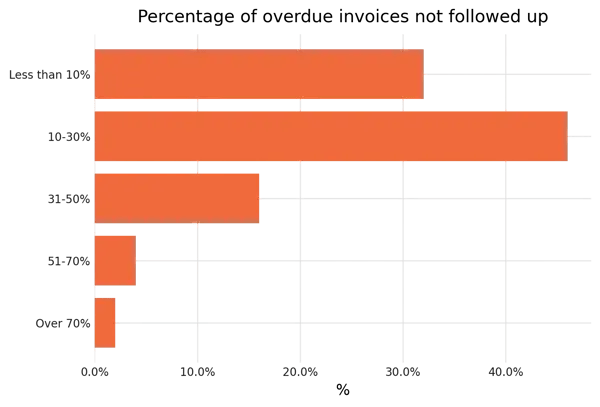
1. Automated invoicing - Automation is a critical part of a streamlined and effective AR management system. Employing an automated invoicing system ensures that invoices are sent on time while also reducing human error. Sending an accurate and timely invoice is the best way to get paid, and automated invoicing allows AR teams to do so without adding to their workload.2. Regular reminders - There are a huge range of reasons why your invoice might be going ignored, and while you're waiting to get paid, your cash flow is suffering. According to the AR report, Businesses that follow up on 100% of overdue invoices are 76% more likely to be paid within one week (28% paid within a week vs 16% for incomplete follow-up); 31% of businesses leave some invoices unchased. Automated reminder systems take most of the work out of chasing your invoices, allowing you to send regular polite reminders that keep your invoice at the top of the pile.
2. Invoice disputes and errors
Errors in your invoices lead to disputes. Disputes with your customers impact your carefully cultivated relationship, while also leading to more payment delays.
Ensuring basic accuracy and timeliness in your invoicing can solve both of these problems, reducing payment delays and helping to promote repeat business by enhancing your customer relationships.
What causes invoice disputes and errors
The most common causes of disputed invoices are:
- Human error - While some human error is to be expected in business, smaller or overworked teams can often lead to compounding errors in your AR processes. These errors lead to delays, disputes, and further losses.
- Unclear terms - Clear payment terms ensure you and your customers are always on the same page when it comes to payment details and timelines. Unclear payment terms lead to misunderstandings and miscommunications and, at worst, can sour your relationship with a potentially valuable customer.
The fix
Thankfully, there are some very easy-to-adopt solutions that can prevent errors from creeping into your AR processes and causing disputes.
- Accurate invoicing - Accuracy in your invoicing is critical. All invoices should, at least, be double-checked before sending. Automated invoicing systems can help to reduce human error and increase accuracy while not negatively impacting your AR team's workload.
- Clear communication - Implement transparent payment terms and clear communication to prevent disputes from ever happening. If you and your customer both understand a clear set of payment terms, then any minor errors can be caught and rectified easily with a minimum of misunderstandings.
- An effective dispute resolution process - Not only does a robust dispute resolution process help to quickly resolve issues, but it can also help to build a positive relationship with your customers. Just having a dispute resolution process in place demonstrates to your customers that you take any issues they raise seriously and will work with them to resolve any disputes.
Left unaddressed, unclear communication is often what turns a small invoicing error into a full dispute.
3. Cash application and reconciliation
Matching incoming payments to the right invoice sounds simple until you are doing it by hand, at volume, with remittance detail that doesn’t always arrive attached to the payment.
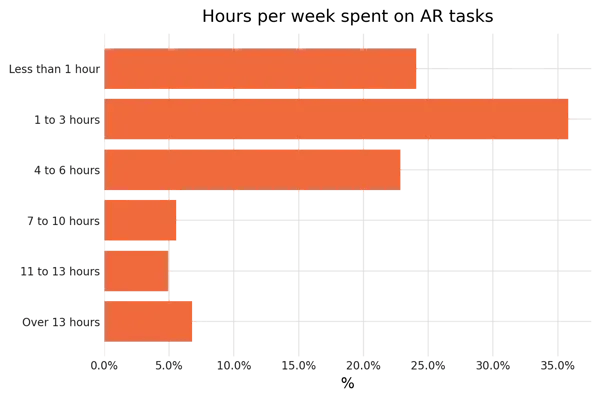
76% of businesses spend three or more hours a week on AR tasks, and 40% spend six or more, according to Chaser's AR report. A meaningful share of that time sits behind the scenes in manual matching and reconciliation.
What causes cash application and reconciliation problems
The most common causes of cash application and reconciliation problems include:
- Manual matching - Staff cross-check bank feeds against invoices and remittance detail by hand, one line at a time.
- Legacy payment methods - Some payment methods do not carry remittance data cleanly, leaving a payment on the bank feed with no clear invoice to match it to.
- Partial payments - Payments that do not map neatly to a single invoice require someone to decide how to allocate the remainder.
- Payment-status lag - Bank feed timing can run a working day or more behind, so anything working off what is still outstanding is running on data that is already stale.
The fix
Resolving your cash application and reconciliation problems comes down to two things working together:
- Digital payment methods - Digital payments carry remittance data cleanly, which is what makes automated matching possible in the first place, closing off the legacy-payment-method cause directly.
- Automated matching and reconciliation - Remittance advice capture at the point of payment reduces the unmatched payments that stall reconciliation, cutting down on the manual cross-checking that eats staff time. It is worth being precise about the scope here: this reduces reconciliation work and unmatched payments, but it does not fully automate cash application end to end.
4. Poor credit management and credit risk
On average, companies in the UK write off £5.8bn in bad debt every year, with one in 10 scrapping bills worth more than £100,000. For some, unrecoverable debt is responsible for driving them into insolvency.
Effective credit management mitigates the risk of bad debt while providing you with a wider range of opportunities to recover outstanding payments.
What causes poor credit management and credit risk
Some of the most common causes of substandard credit management are:
- Inadequate credit checks - Limited or non-existent credit checking is surprisingly common, with most companies only credit checking customers during the onboarding process, if at all.
- Inconsistent terms - Without obvious guidelines on when and who to offer credit to, businesses can find themselves offering lines of credit to customers who have a history of not making payments. Even with credit-worthy customers, inconsistent terms can lead to misunderstandings, delays, and disputes.
The fix
Mitigating risk is essential to ensuring consistent cash flow and the overall safety of your business. 38% of businesses write off 3% or more of annual revenue as bad debt, with construction carrying the highest exposure.
.webp?width=600&height=419&name=bad%20debt%20(%25%20annual%20revenue%20written%20off).webp)
Thankfully, there are several steps you can take to enhance your credit management processes:
- Thorough credit checks - Credit checking during onboarding and at regular intervals during your business's relationship with a customer is the best way to ensure you don't accrue bad debt.
- Monitor client behavior - Monitor your client's payment behavior and how it changes over time, as this allows you to adapt to their changing creditworthiness and minimize risk.
- A comprehensive credit policy - Put in place a comprehensive credit policy to ensure your staff fully understand when to offer credit. It also means your customers know under what circumstances they'll be offered credit and why that might change.
5. Limited visibility and reporting
Without real-time insight into invoice status and aging, AR teams cannot prioritize which accounts to chase first. Problems surface only after they have already cost cash, and a standard aging report does not always solve this on its own. Knowing an invoice is 45 days overdue is different from knowing whether that customer is fine to leave for another week or needs action today.
What causes limited visibility and reporting gaps
The most common causes of limited visibility and reporting gaps are:
- No aging view - Without an up-to-date view of outstanding invoices, nobody has a clear picture of what is overdue and by how much.
- No DSO tracking - Without DSO tracked over time, it is hard to tell whether collections performance is improving or slipping.
- Fragmented data - When data is spread across systems that do not talk to each other, getting a straight answer means pulling numbers from several places and reconciling them by hand.
The fix
Visibility gaps like this are widespread, and a share of businesses do not know their own bad debt rate. You can’t manage what you can’t see, and that applies as much to the numbers already sitting in the ledger as to the ones still coming in. The fix addresses each of these causes directly:
- AR dashboards - A single, current view of the debtor book replaces a periodic export that is already out of date by the time anyone reads it, closing the fragmented-data gap.
- Aging reports - A live, aggregated view of outstanding invoices closes the no-aging-view gap directly.
- DSO monitoring - Days sales outstanding (DSO) is one of the clearest signals to track over time, since a rising trend line flags a collections problem well before it shows up as a cash shortfall.
6. Inefficient AR processes
All systems are vulnerable to creeping inefficiencies. Without regular review, your AR processes will gradually become less efficient and more time-consuming, leading to costly errors and higher spend but reduced results. In the US, 80% of businesses spend six or more hours a week on AR tasks.
Monitoring, reviewing, and revising your systems when inefficiencies start to appear can reduce errors, eliminate delays, and ensure your cash flow remains healthy.
What causes inefficient AR processes
The most commonly reported causes of inefficient accounts receivable processes include:
- Outdated systems - Outdated legacy systems are a common culprit when it comes to inefficient accounts receivable processes. Many companies and teams are slow or reluctant to embrace new systems or technologies due to a bias towards systems they already understand.
- Lack of automation - Automated systems can't replace skilled workers, but they can reduce the number of repetitive tasks they have to perform, freeing them up to apply their skills in more productive ways.
The fix
As AR technology advances, businesses can choose from a wide range of AR systems to make their accounts receivable processes more efficient.
- Modern AR software - Regularly update or replace legacy systems to make your AR system more efficient while allowing you to take advantage of the features and benefits newer software offers.
- Staff training - Provide effective and supportive training to make staff more comfortable with new systems and adapt to more efficient ways of working. Confident and well-trained staff are better empowered to work to the best of their abilities.
- Process reviews - Regular process audits can help to expose and solve errors and inefficiencies, while highlighting areas for improvement that can further reduce payment delays.
7. Poor debtor communication
Open communication is the bedrock of a productive customer relationship. Failing to communicate effectively with your customers can lead to disputes or worsen an existing situation.
Without clear communication, it becomes significantly harder to resolve any payment disputes and keep your customers happy while ensuring cash flow.
What causes poor debtor communication
Some of the most common causes of poor communication include:
- Infrequent follow-ups - Follow-ups include everything from chasing a late invoice to responding with a thank you when payment is made. Neglecting your follow-ups can lead to forgotten and late payments while denying you the opportunity to build on your customer relationships.
- Unclear instructions - Unclear or contradictory payment instructions slow the entire payment process down and can frustrate your customers.
The fix
Improving your communications with your client is as easy as taking the following steps:
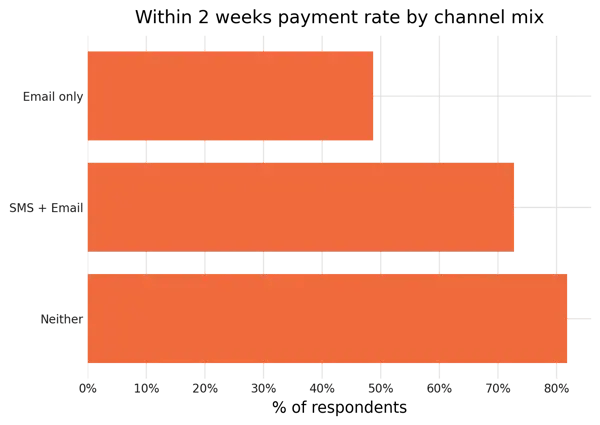
1. Regular communication - Maintain regular contact with your customer to give them a channel through which they can ask questions or clarify issues. Consistent communication is the best way to head off any potential disputes. Combining SMS with email lifts on-time payment to 73% paid within two weeks, against 49% for email alone, a 49% relative improvement. 91% of businesses use email, 56% use phone, and only 23% use SMS.
How automation prevents these accounts receivable challenges
With every challenge above, manual, ad hoc processes let small problems compound into cash flow pressure. AR automation addresses this at the source, rather than reacting once an invoice is already overdue or a customer relationship is strained.
Businesses using AR automation software are 52% more likely to be paid within two weeks of the due date than those relying on manual processes; 71% of software users are paid within two weeks, against 47% of non-users, and only 43% have tried it so far.
That gap shows up task by task:
|
AR task |
Manual |
Automated |
|---|---|---|
|
Chasing overdue invoices |
Staff remember to follow up ad hoc, and some invoices go unchased entirely |
Reminders sent on a set, multi-channel schedule for every overdue invoice |
|
Matching payments to invoices |
Staff cross-check bank feeds against invoices and remittance detail by hand |
Payments matched to remittance data automatically as they arrive |
|
Credit risk monitoring |
A single check performed at customer onboarding, then not revisited |
Ongoing monitoring of payment behavior, with risk flagged as it changes |
|
Aging and DSO reporting |
A spreadsheet updated periodically, already out of date by the time it is reviewed |
A live dashboard showing aging and DSO as the underlying data changes |
Chaser’s AR automation gives you all the tools you need to streamline and enhance your AR processes. Automated, error-free invoicing and consistent, multi-channel reminders free your AR staff from repetitive tasks so they can spend their time on the accounts that actually need judgment.

Built-in credit checking lets you monitor client payment behavior and assess creditworthiness on an ongoing basis, not just at onboarding. The Late Payment Predictor and Recommended Chasing Times use payment history to flag risk early and time reminders for when they are most likely to land.
If you want to know where your own AR process stands against these 7 challenges, download the accounts receivable health checklist and work through it against your current setup. It covers the same ground as this guide in a format you can put in front of your team. When you are ready to put prevention in place, try Chaser for free or speak to an expert.
Fixing these one at a time is slow; the 90-day AR transformation checklist sequences the work.
.jpg)