


















.svg.png?height=48&name=Zoho_CRM_(application).svg.png)







It is time to follow up on a past-due invoice. The customer’s AP team responds, but payment is on hold because the invoice total does not match what Sales promised. A discount closed the deal, but those details never made it into billing. Now the AR specialist is stuck reopening deal terms, chasing internal answers, and trying to stay credible while the CFO asks why cash has not arrived.
This rarely happens once as it is the predictable result of disconnected workflows across Finance, Sales, Support, and the customer’s AP process. Pricing exceptions sit in inboxes, credit context lives in systems Sales cannot see, and disputes get lost across fragmented email threads.
Most teams react by adding more activity: more spreadsheets, more calls, more dunning letters, more approvals. These ad-hoc fixes create motion, not alignment.
Collaborative AR is a system where alignment is the default. This guide outlines a two-level framework that makes collaboration intrinsic internally between Finance and Sales or Support, and externally with customers’ AP teams to reduce disputes and lower DSO.
Why current approaches to collaborative AR keep failing and what is actually missing
The problem is not a lack of effort. The problem is that most approaches treat collaboration as something to do, like sending reminders or scheduling calls, instead of something to be, like a shared operating state. When collaboration is optional, the system defaults back to silos and AR inherits the consequences.
Below are the most common approaches and why they fail.
Failed approach 1: Excel tracking
Spreadsheets feel practical because they are fast to set up and easy to personalize. The problem is that Excel is not a shared system of record. It becomes a private map of reality inside the finance team, and it rarely includes the context that Sales and Support need to resolve issues.
Updates are manual, records drift, and the spreadsheet turns into a lagging indicator of problems rather than an early warning system. What is missing is a single source of truth that makes collaboration the default instead of an extra step.
Failed approach 2: Collection calls and dunning letters
Calls and letters are reactive by design. They occur after an invoice is already late. Calls can quickly become tense, especially when the customer uses delay tactics like “never received the invoice” or “need backup documentation.”
Generic dunning letters are easy for customers to ignore, especially when they lack context or a clear next step. What is missing is self-service transparency and frictionless action for the customer, so payment and dispute resolution are easier than stalling.
Failed approach 3: Ad hoc Sales outreach
When a dispute appears, reaching out to Sales is a common move. It is also unreliable. Sales tends to prioritize new deals. Pricing promises are often verbal or lost in a thread that is hard to reconstruct.
Coordination after the invoice is sent is inherently late, and it turns AR into an internal detective. What is missing is systematic visibility into deal terms and early warning before reminders go out, so Sales can prevent relationship damage and fix errors before the customer escalates.
Failed approach 4: Credit approval workflows
Credit approvals can be necessary, but they often fail as a collaboration strategy. Sales experiences them as friction that slows deals. Finance lacks enough context to approve exceptions quickly, so the process becomes adversarial.
Sales then looks for ways around it, including informal promises that do not reach billing. What is missing is collaboration that feels natural and fast, supported by shared context and shared risk visibility at the deal stage.
The missing piece is simple and uncomfortable. If alignment does not happen at deal inception, getting aligned afterward becomes much harder. Many tactics treat the symptom, which is late payment. The underlying cause is cross-functional disconnects that create invoice errors, confusion, and disputes.
The solution is to build collaboration into infrastructure at two critical levels. That is the focus of the two-level collaborative AR framework.
The two-level collaborative AR framework
Collaborative AR works when it is built into how teams operate rather than layered on top of existing silos. The framework has two levels. Level 1 is internal collaboration between Finance and Sales or Support. It prevents errors before invoices go out and prevents misalignment during collection activity.
Level 2 is external collaboration between the AR team and the customer’s AP team. It removes friction, creates transparency, and surfaces disputes quickly. When both levels function, errors are caught in days, not months, and DSO improves because the system resolves root causes rather than escalating tension.
Level 1: Internal collaboration, aligning finance and sales teams

The most expensive accounts receivable problems are often created before the invoice exists. Sales offers special pricing, discounts, or non-standard terms. Support may know about delivery issues, onboarding gaps, or usage disputes that can block payment.
Finance is expected to collect cash, but Finance is not present when the promise is made or the service issue arises. By the time invoicing happens, the opportunity to prevent conflict has passed.
Level 1 collaboration fixes that by making coordination the default state at the point where risk is created and where collection activity can cause damage.
Centralized record-keeping as a default
With good receivables management, every customer has a single shared record of truth that covers invoices, payment status, dispute history, and relevant communications. Finance is able to see it and Sales and Support able to access it, so when a dispute is raised there is no time wasted arguing over who said what because the context is already there.
Because disputes often stall while teams reconstruct history across departments, and a centralized record shortens resolution time, avoids credibility damage from inconsistent internal narratives, and reduces repeated customer outreach that signals disorganization.
Most teams miss this because spreadsheets and inboxes remain the default, and because they require ongoing discipline to maintain, they decay, making collaboration effectively optional, which predictably fails during high-volume periods.
Chaser’s Receivables CRM is built to solve this by consolidating context in one place, pulling data from accounting systems and organizing customer history.
As the product team at Chaser put it : “In the receivable section of Chaser you can access a CRM of all of your debtors based on data that's pulled from your accounting system. You can record phone calls with your debtors and all the recordings and notes that you add will be visible in your customer history. All of the customer replies from your email will be pulled from your email account so you'll have a comprehensive overview of those debtor communications and there's no need to switch between multiple systems."
Proactive visibility into who is being chased
Solid receivables management means the sales consistently knows which customers are being chased and when communications are scheduled to go out. This creates a proactive loop rather than ad hoc visibility, so if a renewal conversation is underway or a billing issue is already known, Sales can flag it before an automated reminder damages the relationship.
Most customer tension arises when payment outreach clashes with active commercial conversations, and proactive visibility lets Sales correct invoice errors, clarify expectations, or coordinate messaging, while also giving Finance the context it needs to prioritize effectively.
Most teams miss this because many AR systems treat reminders as a closed-loop finance process where messages go out first and only afterward does Finance learn a dispute existed or a negotiation was in progress, which forces reactive escalation.

Forewarn workflows address this by aligning teams in advance through notifications to Sales before reminders are sent, including a 24-hour heads up via email, plus @mentions and internal collaboration tools that route the right information to the right person without searching through email threads.
Shared risk visibility at the deal stage
Visibility is a core part of effective receivables management. It allows Sales to see relevant risk context early when structuring deals, including payment history, credit limits, and indicators of late-payment risk. This then allows Finance to set guardrails without slowing deals because the decision-making context is visible upfront.
This matters because a common failure mode is "close the deal now, escalate later” and shared risk visibility helps prevent uncollectible deals, reduces invoices that end up requiring escalation, and improves payment terms because they are set with a realistic view of customer behavior.
Most teams miss this because credit and payment risk data typically sits inside Finance and Sales rarely has access, so decision-making becomes guesswork and Finance is forced into a reactive role later.
Shared credit monitoring and risk signals bring these conversations forward by giving Sales risk indicators before committing to terms, enabling safer deal structures without last-minute approvals. The overall shift is from “remember to coordinate” to “coordination is built into the workflow,” which separates teams that simply chase harder from teams that prevent disputes from being created in the first place.
Level 2: External collaboration, aligning the team with customers’ AP teams
Even when invoices are correct, customers can delay payment through process friction. AP teams may claim an invoice was never received. They may request documents, statements, or PO references. They may raise disputes in scattered reminder emails that do not clearly identify what is blocking payment. The result is manual repeated exchanges, uncomfortable calls, and prolonged DSO.
Level 2 collaboration fixes that by making transparency and action easy for the customer.
Make self-service transparency a default
Effective accounts receivable oversight gives customers one central place to view invoices, statements, and payment status. They can download documents without requesting them. They can confirm what is outstanding versus paid, and flag discrepancies quickly. ideally within days of invoice issuance.
Transparency eliminates the most common excuses for delay and shifts disputes earlier, so instead of uncovering a pricing issue after 60 days of silence, it surfaces while there is still goodwill and momentum to resolve it.

Most teams miss this because many AR processes still depend on email attachments or mailed invoices, and when an attachment is lost, filtered, or endlessly forwarded, visibility collapses and the experience hinges on the customer locating a document buried in a thread. Customer portals solve this by providing 24/7 invoice visibility, reducing inbound questions about basic status, and giving customers a predictable, structured path to raise issues.
Give customers friction-free payment options
Strong accounts receivable operations let customers pay how they want, without back-and-forth coordination. Payment choices are presented together with simple, unambiguous instructions. It accommodates cards and digital wallets, as well as bank transfers and direct debit when appropriate.
Payment friction materially contributes to late payments, and limited options create avoidable delays when an accounts payable team has to follow internal steps that vary by payment method, so reducing friction increases the likelihood of on-time payment and lowers administrative workload.
Most teams miss this because payment enablement is often treated as a separate initiative from accounts receivable, even though payment options are part of the collection strategy because they determine how easy it is for customers to comply. A portal that supports card, Apple Pay, Google Pay, bank transfer, and direct debit removes barriers and shortens the time from approval to payment.
Be proactive about communication to preserve relationships
Well-run accounts receivable processes keep communication timely, consistent, and appropriately tailored. Early reminders can come from an account manager or another familiar sender. Finance still controls the timing and cadence. Escalations occur when needed, but aren’t the default. Customers feel informed, not targeted.
The practical benefit is that teams can protect customer relationships while improving cash collection, since generic dunning letters often fail by feeling automated and disconnected from the relationship, and manual personalization does not scale for high invoice volumes, so the real solution is a system that makes professional, relationship-aware communication repeatable.
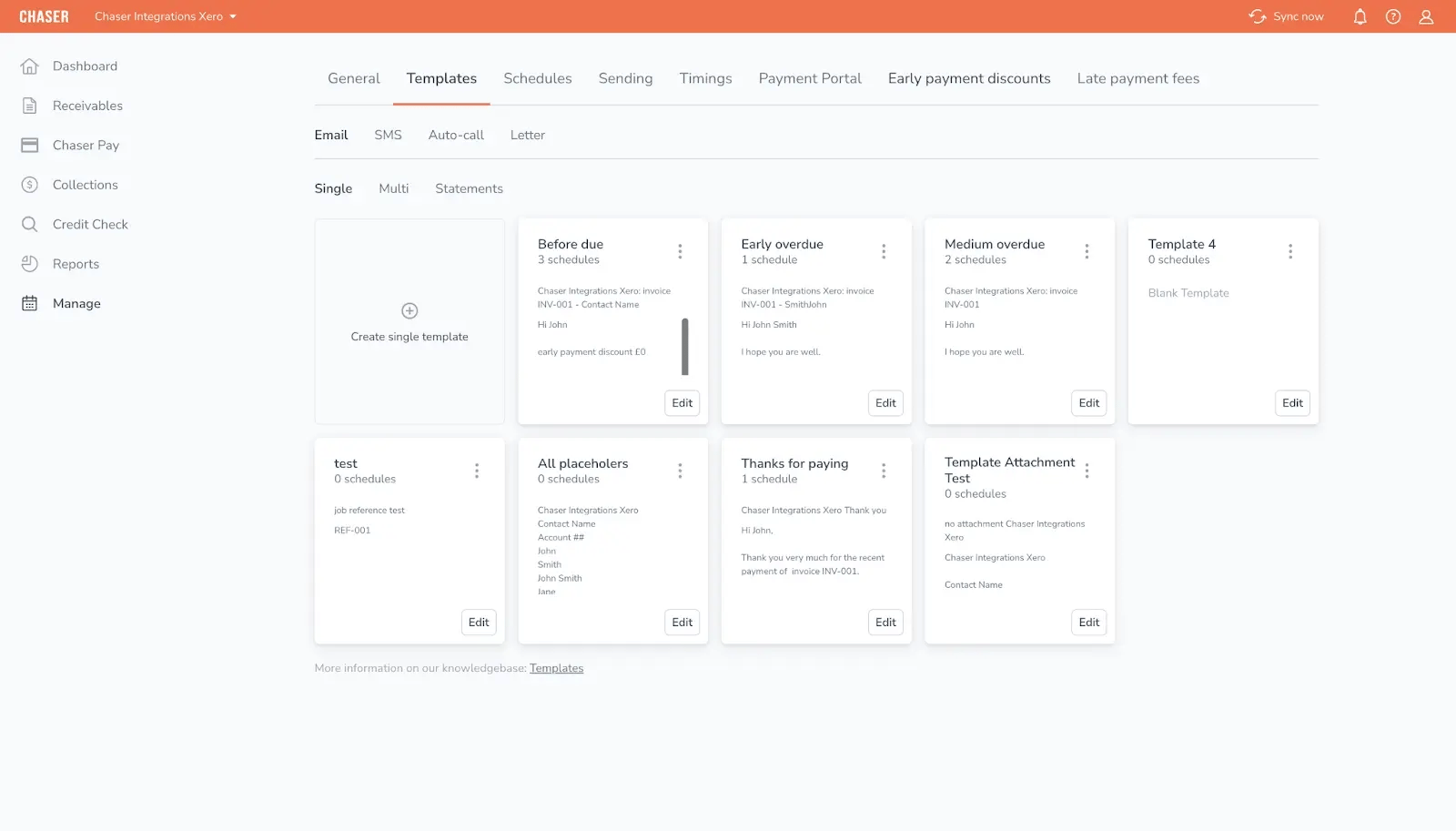
Most teams miss this because they default to generic templates or aggressive escalation because it is operationally simplest, even though it often increases customer frustration and raises dispute risk. Customizable sender aliases can draw on the credibility of Sales or account management while Finance maintains process control, keeping reminders aligned with relationship context without creating manual work for Sales.
The shift is from reactive collection without visibility to transparency and convenience. When customers can see what is due, access documentation, and pay easily, AR becomes less adversarial and more predictable.
Stop being reactive after invoices go out. Chaser’s transparency catches disconnects as they happen. Build collaborative AR into your workflow.

How the two levels work together to improve collaboration and customer satisfaction
The two levels compound. Level 1 reduces the number of errors that make it to invoicing by aligning Finance, Sales, and Support before outreach and before disputes are created. Level 2 ensures that any remaining issues are surfaced quickly because the customer has visibility and a clear path to act.
Consider a common scenario. A customer notices a pricing discrepancy the same day an invoice is issued because the invoice is visible in a portal. The customer flags the issue immediately. Finance and Sales see the same account history in a shared system and resolve it within 24 hours. What would have become a 60-day dispute and a relationship strain becomes a swift correction and a trust-building moment.
This is how DSO improves sustainably. Not by chasing harder, but by eliminating the disconnects that create delay. In the most dramatic cases, teams can move from collection cycles like 87 days to 33 days by reducing disputes, reducing friction, and making collaboration intrinsic.
How to improve collaborative accounts receivable with Chaser
Collaborative AR is easy to describe and hard to sustain without infrastructure. The reason is simple. Manual coordination requires constant attention, and attention is scarce when invoice volume rises and disputes increase.
Chaser is built to make intrinsic collaboration possible at both levels by providing a single source of truth, proactive visibility, and customer self-service. Instead of asking teams to “communicate better,” the system makes alignment the default behavior.
Chaser enables the framework in two ways. First, it supports internal collaboration between Finance and Sales through shared context and proactive alerts. Second, it supports external collaboration by giving customers visibility, payment options, and clear next steps.
Improve internal collaboration with Chaser
Receivables CRM
Excel silos create context loss across teams and across time. Chaser’s Receivables CRM aggregates communications and account history in one place for you. This reduces time spent reconstructing context during disputes and enables faster internal alignment.
Chaser’s product team’s description captures communications, call notes, and email replies can be pulled into a comprehensive customer history, reducing the need to switch systems and reducing the risk of missing information.
Internal notes and @mentions
Slack and email are fast, but they strip context from the invoice and customer record. When a Sales rep is asked to confirm pricing, the thread often lacks the relevant attachments and timeline.
Chaser supports internal notes tied to invoices and accounts, and @mentions to notify specific team members. This keeps resolution work in context and reduces handoff delays. The outcome is shorter time-to-resolution because ownership and history are visible.
Forewarn emails
Automated reminders can backfire during negotiations or when a known issue exists. Forewarn emails solve this problem by giving Sales and relevant stakeholders advance notice, such as 24 hours before a reminder is sent. This creates a consistent feedback loop where Sales can flag errors, confirm disputes, or coordinate messaging before customer contact. The outcome is fewer avoidable escalations and less relationship damage.
Get paid faster and reduce DSO with Chaser
Payment portal
When customers say “never received it,” the real problem is visibility. Chaser’s payment portal gives customers a single place to view invoices, download documents, and see what is paid versus outstanding.
Automated invoice and statement attachments plus a portal link in templates keep both sides aligned, reduce back-and-forth admin, and make it easier for customers to pay using their preferred method.
Multiple payment methods
Limited payment options delay payments and increase admin burden. Chaser consolidates payment methods inside a single portal experience, including card payments and digital wallets, alongside transfers and direct debits depending on setup.
This helps customers to choose the fastest path that matches internal accounts payable policies. The outcome is fewer stalled payments due to friction in the payment methods and fewer manual instructions that have to be repeated across threads.
Customizable sender aliases
Generic reminders can be ignored or can damage relationships if they feel robotic. Customizable sender aliases allow early reminders to align with the commercial relationship, such as appearing to come from the account manager, while Finance maintains the systematic cadence.
Escalations can be structured so they happen intentionally rather than emotionally. The outcome is a communication approach that protects customer goodwill while improving payment consistency.
How Chaser has helped teams achieve results with collaborative AR
Community Energy Scheme
A large backlog of old debt was compounded by disorganized tracking and visibility gaps, so the team centralized communications through a receivables CRM to reduce reliance on spreadsheets and strengthened customer self-service through a payment portal.
The result was £800,000 GBP of old debt recovered and £18,000 GBP per month collected through self-service payments, alongside improved visibility across the team that reduced reactive work and tightened control of follow-up activity. This example shows how internal visibility helps prevent avoidable disputes, while external transparency and convenience speed up payment.
TaxAssist Accountants
Time was being lost to calls and emails, and uncomfortable conversations were straining relationships, so customer self-service was expanded and reminders were automated through a portal-based experience.
This saved 21 days per year and enabled £20,000 to be recovered in 30 minutes through portal-enabled payment, while reducing uncomfortable phone calls because customers had what they needed to act. It directly addresses the common point of friction in accounts receivable where chasing damages relationships and still does not reliably produce cash.
FHC and Docuflow
A long collection cycle, unpleasant calls, and ignored statements were addressed by enabling direct payments and improving transparency through a portal. DSO improved from 87 days to 33 days, a 54-day reduction, with fewer uncomfortable interactions.
It demonstrates how better external collaboration can materially shorten cycle time when payment friction and poor visibility are major contributors.
Over 10,000 users worldwide rely on Chaser to get paid faster, protect their cash flow and maintain good customer relationships.
Stop being reactive by making collaboration the default
Collaborative accounts receivable is best understood as a two-level operating model. Level 1 aligns Finance with Sales and Support so invoice errors and misaligned outreach are prevented. Level 2 aligns the AR team with the customer’s AP team through transparency, convenience, and structured communication. Both levels matter. Fixing only the customer experience leaves internal error sources intact. Fixing only internal workflows still leaves customers stuck in friction and ambiguity.
The payoff is measurable. Fewer disputes. Faster resolution. Less relationship damage. Lower DSO that comes from eliminating disconnects rather than escalating pressure.
With Chaser, you can build a transparent workflow that catches disconnects as they happen and improve collaboration within your team. Speak to an expert to see how this works.
FAQs