


















.svg.png?height=48&name=Zoho_CRM_(application).svg.png)





%20-%20AR%20automation_%20What%20it%20is%20and%20to%20automate%20your%20accounts%20receivable.png?length=1248&name=Blog%204%20(Sep)%20-%20AR%20automation_%20What%20it%20is%20and%20to%20automate%20your%20accounts%20receivable.png)
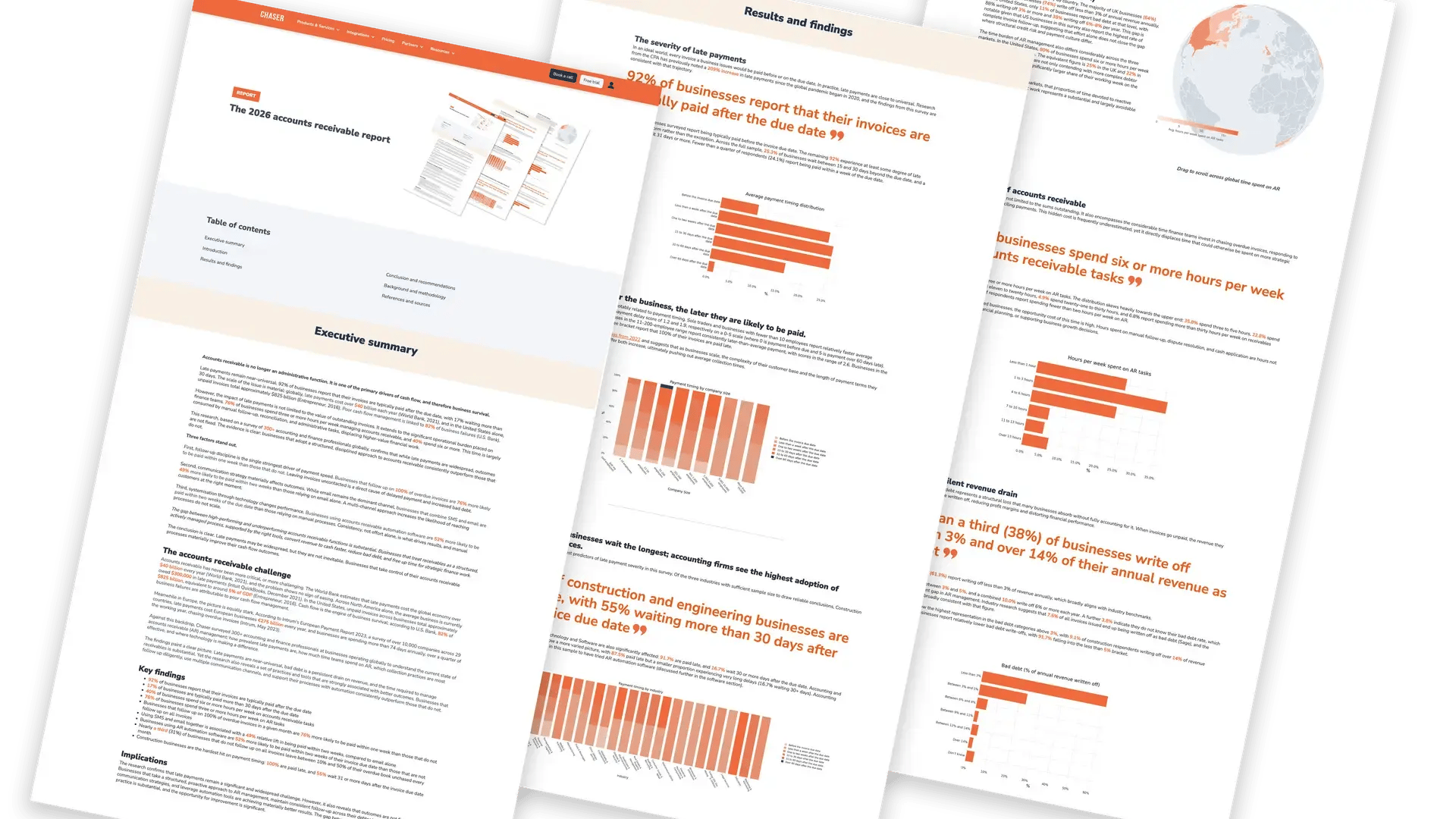
Most AR automation tools solve the same problem: too many invoices to chase manually. The data supports this as businesses using AR automation software are 52% more likely to be paid within two weeks than those that are not, according to Chaser's 2026 accounts receivable report.
But 92% of businesses still get paid late as the norm. While automation moves the needle on collection speed, it does not clearly tell a Finance Manager which invoices will land this month and which will not.
The problem starts with prioritization. Chaser's 2026 AR report found that businesses following up on 100% of their overdue invoices are 76% more likely to be paid within a week, yet 31% of businesses leave some invoices unchased every month. Most AR tools chase by age or invoice value but they do not distinguish between a customer who always pays at 45 days and one who is quietly heading toward a write-off.
The deeper gap is in what the collections process records. A tool that sends reminders and logs responses tracks activity but it does not build up payer-level data (who pays late, how late, on which invoice types, after how many touches) that a cash flow forecast can use.
Payment terms tell you when invoices are supposed to land and collections behaviour tells you when they actually will. Most AR tools capture the former and ignore the latter.
This article evaluates six AR automation tools on how well they chase, how intelligently they prioritize, whether they preserve customer relationships at scale, and whether they help you clearly forecast.
There's a comparison table and a decision framework at the end.
The 6 best AR automation software tools for 2026
|
Tool |
Best for |
Key features (top 3) |
Pricing |
Capterra rating |
|
Chaser |
Mid-market B2B businesses that need automated chasing and a reliable forecast suite |
Personalized multi-channel chasing, payer risk prediction, live cash forecast |
Revenue-based pricing, free trial available |
4.9/5 (45 reviews) (Capterra) |
|
Upflow |
SaaS and tech-forward teams wanting broad AR visibility and a free tier |
Multi-channel collection, customer timeline, cash application |
Four tiers based on ARR, free plan available |
4.5/5 (15 reviews) (Capterra) |
|
Quadient AR |
Finance teams needing a full order-to-cash suite |
O2C automation, ML forecasting, payment portal |
Quote-based |
4.5/5 (33 reviews) (Capterra) |
|
Gaviti |
AR teams running multiple or non-standard ERPs |
ERP-agnostic integration, modular pricing, zero-fee ACH |
Quote-based |
4.5/5 (91 reviews) (Capterra) |
|
Invoiced |
Businesses with subscription or recurring billing alongside standard AR |
CashMatch AI, collections forecasting, subscription billing |
Quote-based |
4.7/5 (149 reviews) (Capterra) |
|
HighRadius |
Enterprise finance teams with complex ERP environments |
AI cash posting, global EIPP, AI collections management |
Quote-based |
4.4/5 (13 reviews) (Capterra) |
1. Chaser
Best for: Mid-market B2B businesses selling on payment terms that need automated chasing that preserves customer relationships, intelligent invoice chasing prioritization, and forecasting module built on how customers actually pay rather than when their terms say they should.
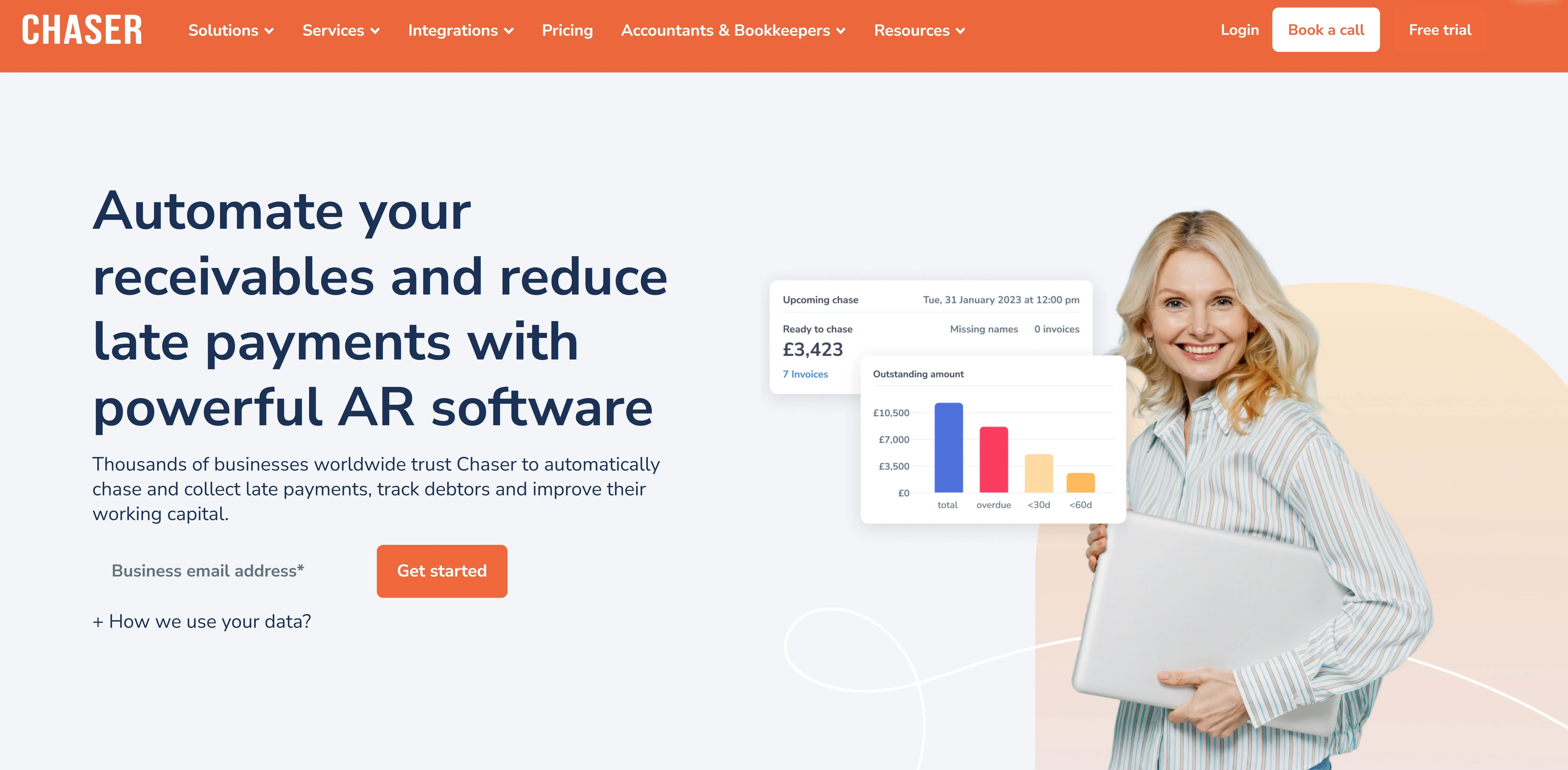
Chaser is built for mid-market B2B businesses that sell on payment terms and need their AR process to identify risk early, follow up intelligently, and send every reminder from your own domain so customers cannot tell it was automated.
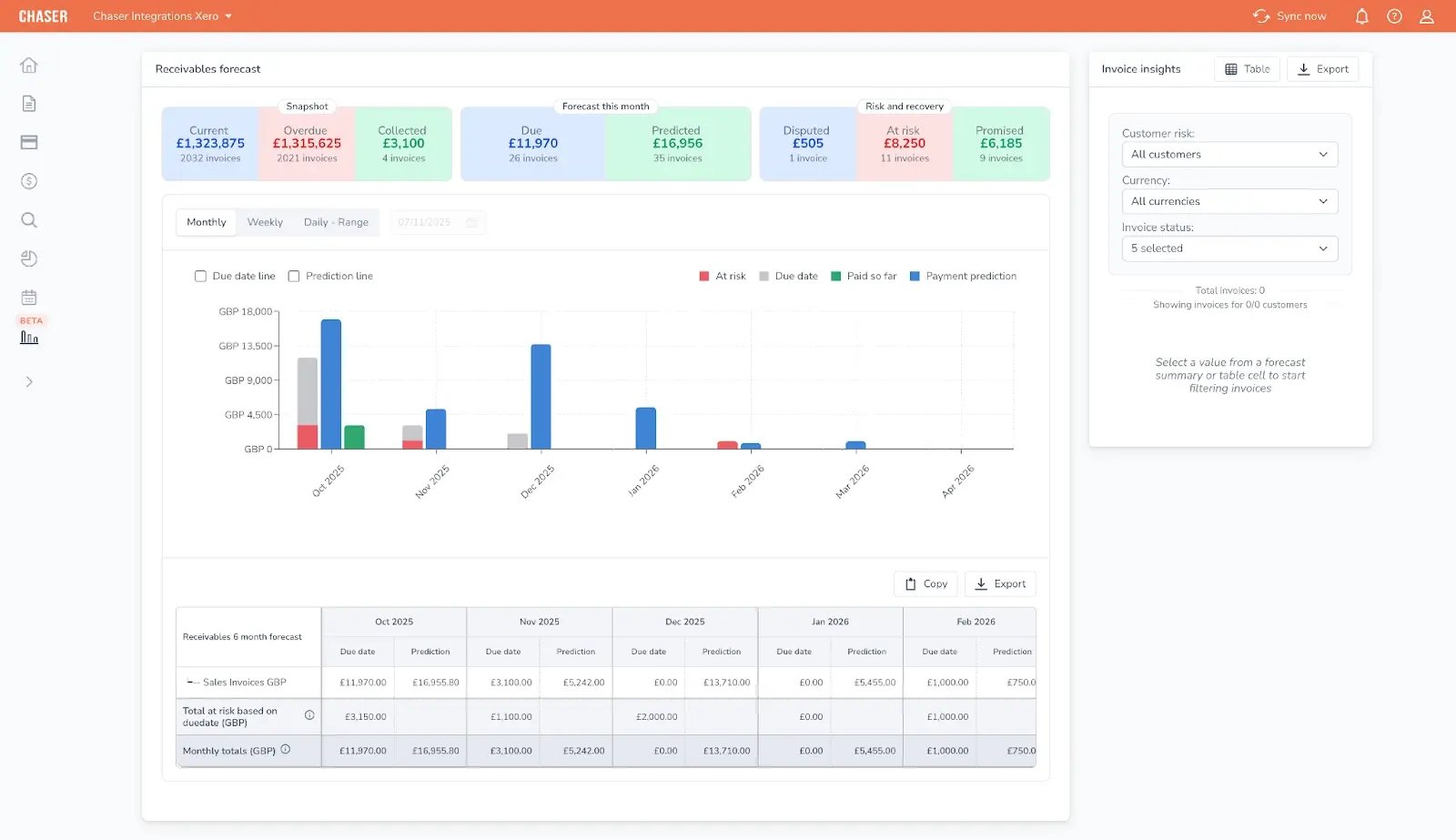
In addition, Chaser also has a forecasting suite for cash flow, receivables and revenue.
Because Chaser tracks collections activity across every account continuously, the forecasting module draws on how each customer actually pays rather than when their terms say they should. A customer who consistently settles at 50 days on Net 30 terms gets forecast at 50 days, not 30. Chaser builds the forecast from what is actually happening in collections.
See which invoices need attention before they go overdue
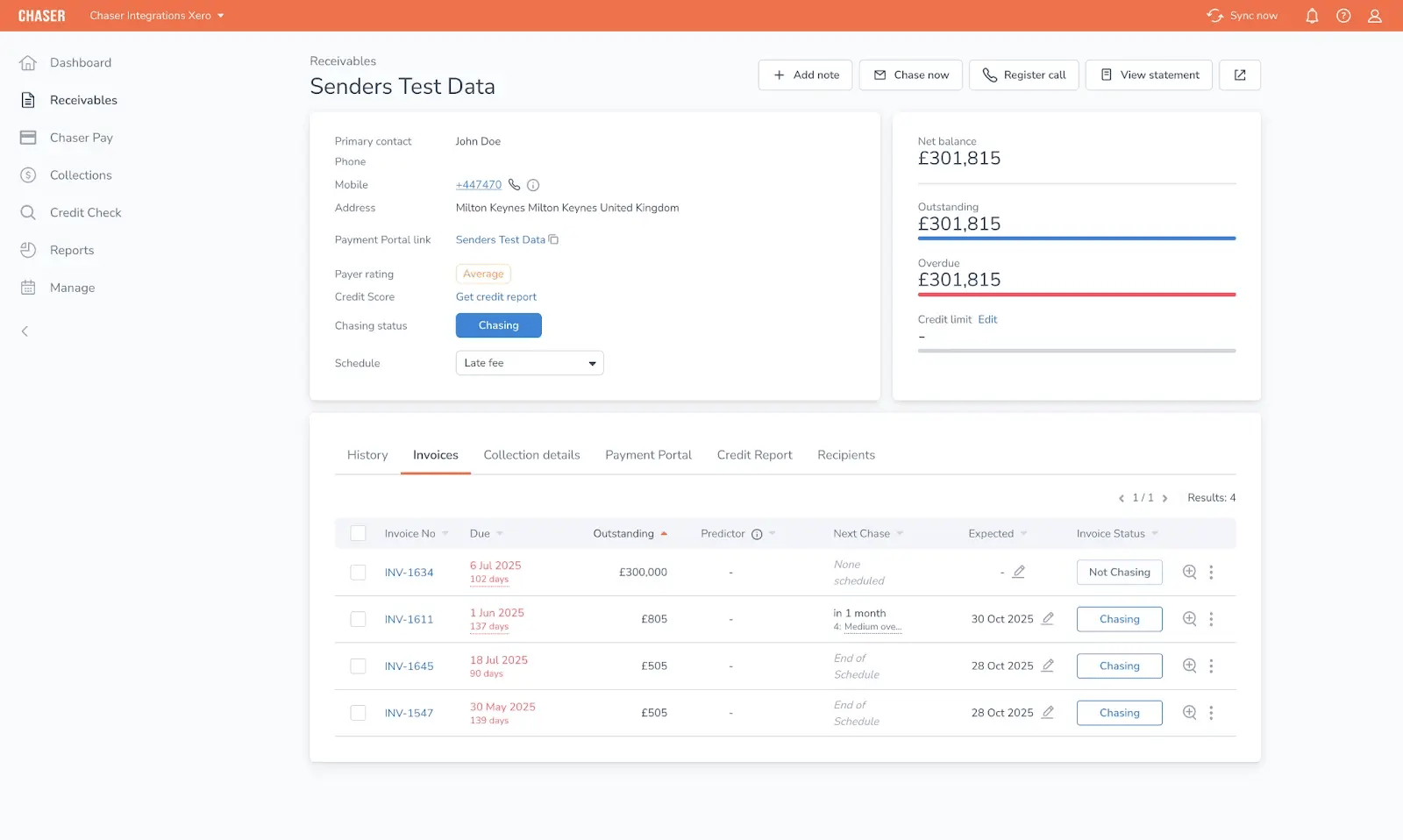
The Late Payment Predictor scores each invoice by risk level based on the due date, invoice value, and the customer’s history of payment behavior.
High-risk invoices are flagged before they cross the due date, so the team has time to influence the outcome rather than chasing from behind.
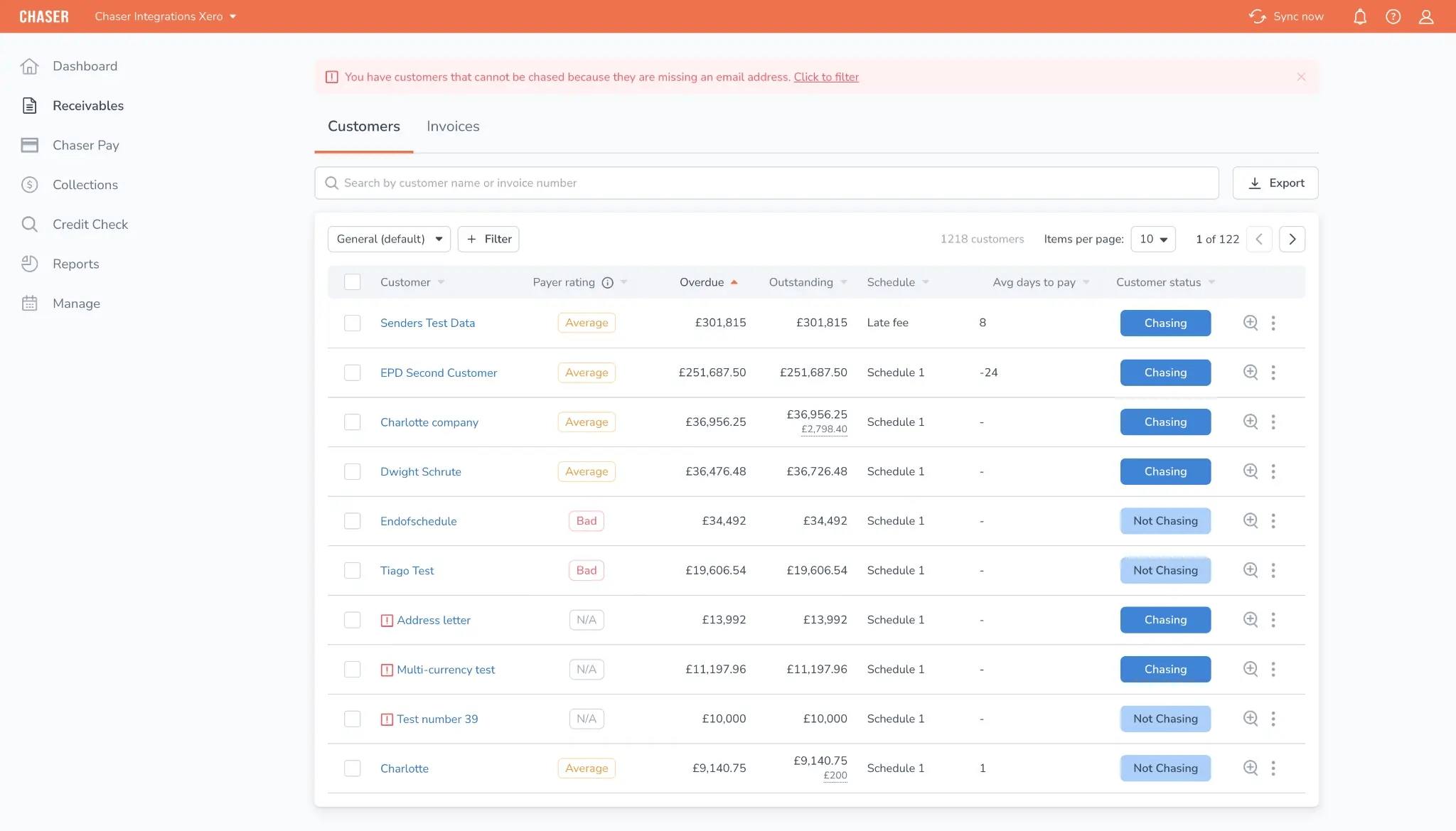
Payer rating gives each customer a classification based on their payment track record, so follow-up efforts go to the accounts where they will make the most difference.
Follow up through the channel most likely to get you paid
Every reminder goes out from your own email address and domain, with your signature. Each one is authenticated via SPF/DKIM, so it lands in the inbox rather than the spam folder. To the customer, it reads as a personal message, so they can’t tell it was automated.
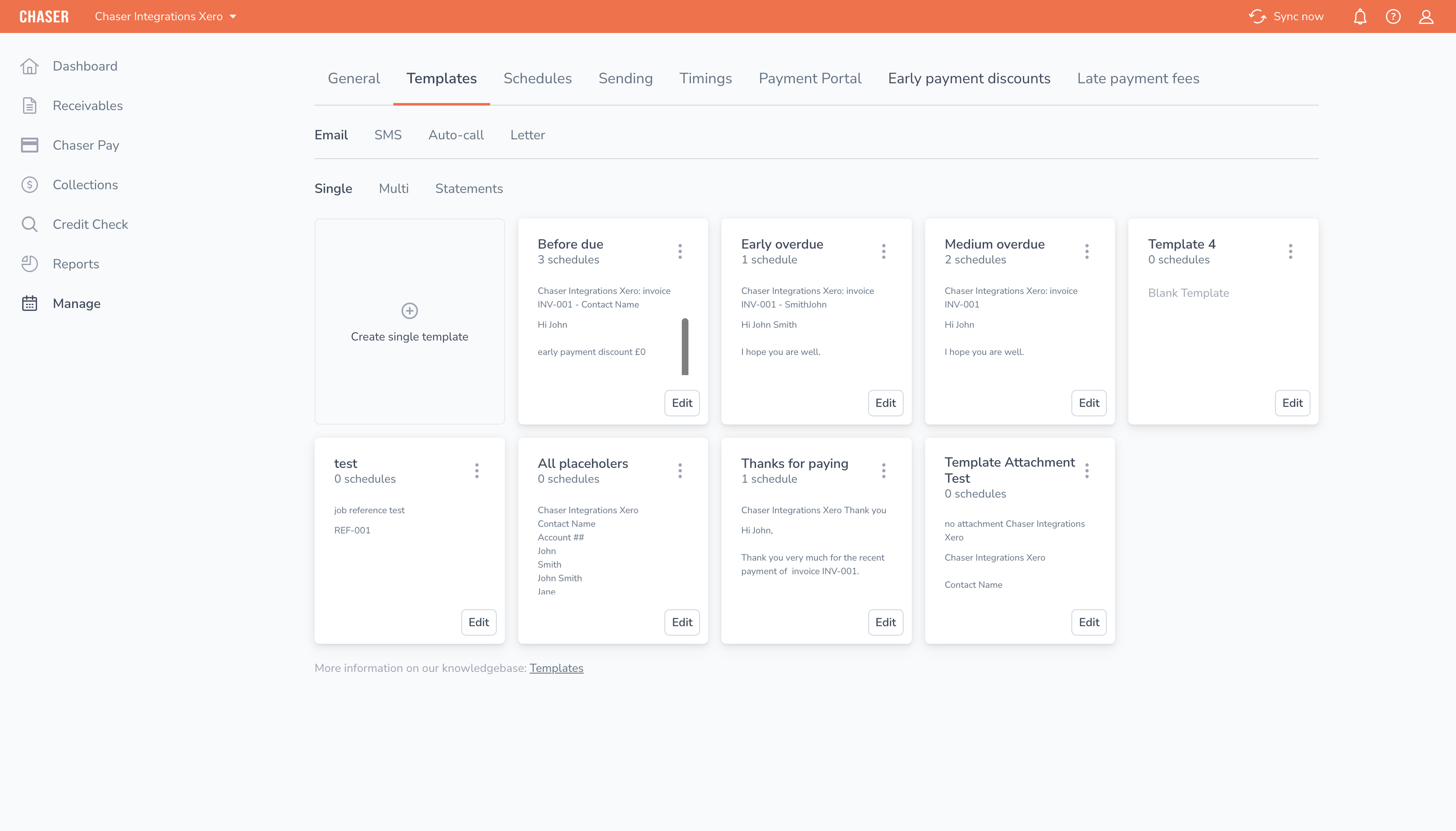
Where email alone is not enough, the platform escalates through SMS, automated calls, and posted letters with QR codes that link directly to the Payment Portal.
Recommended chasing times analyzes when each customer has historically opened emails and made payments, and schedules reminders accordingly, without requiring any manual adjustment. This helps improve open and response rates which ultimately help with collections and reduce DSO
.
Remove the friction between reminder and payment
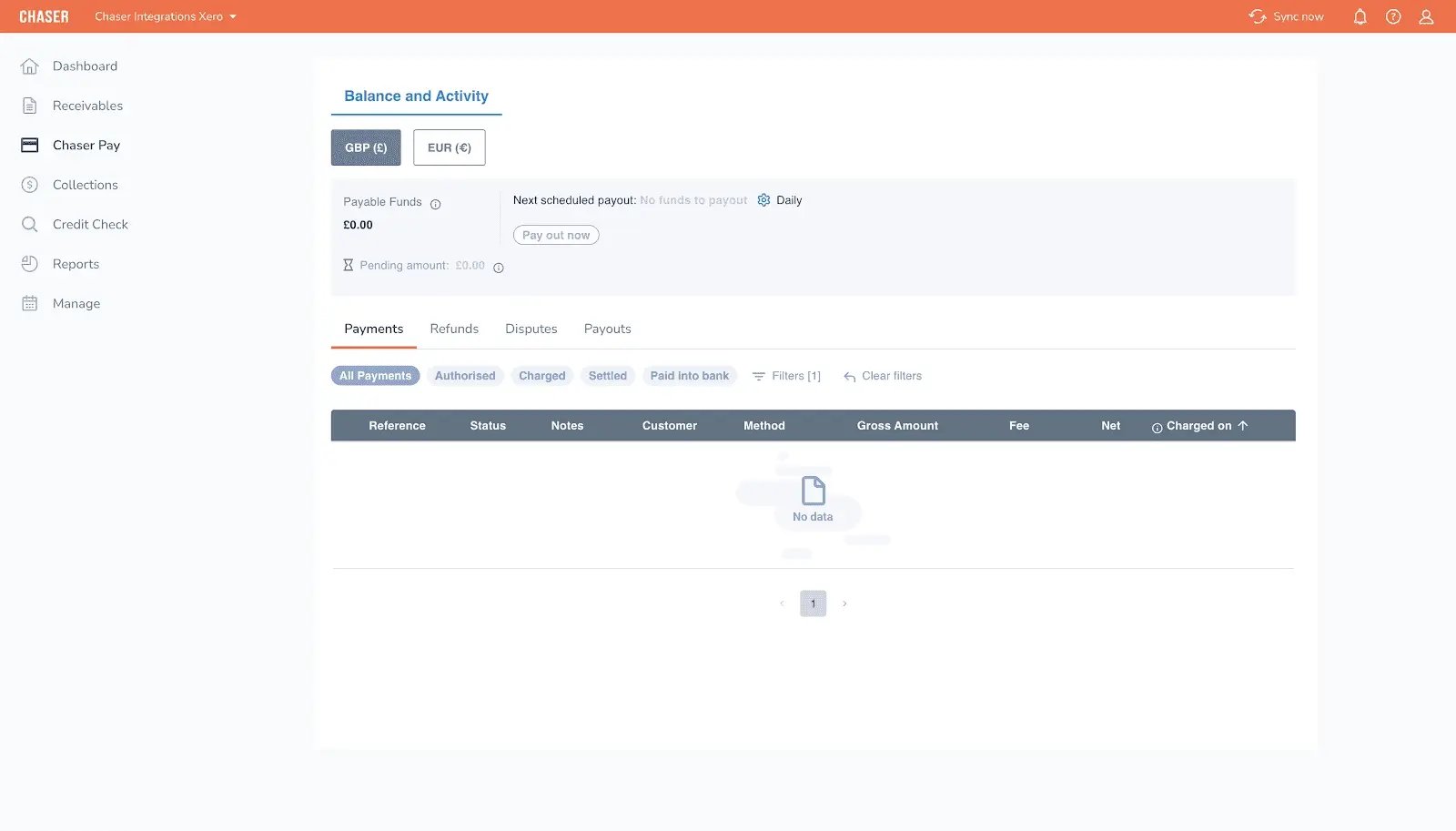
Chaser Pay gives customers a single place to see what they owe and settle it immediately, by their preferred payment channel.
When a customer needs more time, you can set up installment plans and each payment is automatically chased as it falls due.
Forecast from payment behavior, not just payment terms
The cash flow forecast tool projects cash timing based on how each customer actually pays rather than when their terms say they should. This way, you always have a clear picture of your cash position and you’re never in a tight spot to cover your payables.
Cash flow forecast Tool is currently available to Xero and Quickbooks users only, with additional integrations in development. The revenue forecast and receivable forecast tool are available to all users regardless of integration.
Escalation when the platform reaches its limit
For accounts that need more than automated follow-up, Chaser Care provides access to a dedicated credit control specialist who works within the client's brand. Accounts that require formal recovery can be passed to a no-win-no-fee debt collection service without leaving the platform or managing a separate supplier relationship.
Chaser pros
- Collections behavior drives the forecast, so cash timing projections reflect what is actually happening in AR rather than what payment terms assume
- Every reminder goes from your own domain and reads as personal correspondence, which preserves customer relationships at scale
- Proactive risk flagging shifts the team from reactive chasing to prioritized, data-driven collections
- Escalation through Chaser Care and no-win-no-fee debt collection is built into the platform with no third-party handoff
Chaser cons
- Cash flow forecast Tool is currently available to Xero and Quickbook users only, with additional integrations in development
- The platform does not cover AP forecasting, payroll, or balance sheet modeling
- Designed for mid-market B2B businesses with meaningful AR volume, not for enterprise treasury teams or micro-businesses
Chaser pricing
Chaser offers custom pricing based on invoice volume, with a free trial available before you commit. The pricing page has more details.
Chaser reviews
Chaser holds a 4.9/5 rating on Capterra based on 45 reviews. Finance teams consistently praise the platform's ease of use, the quality of the automations, and the impact on collection efficiency.
Huttie Group spent up to three full days per month on manual credit control before implementing Chaser. Tom Hays, Head of Finance, described cash flow forecasting as becoming accurate after implementation, with more than 80% of escalated invoices paid and no customer complaints received.
The Community Energy Scheme had £2 million in old debt and a credit control process built on spreadsheets. After implementing Chaser, £800,000 was recovered. More significantly for ongoing cash flow, the payment portal removed enough friction from the payment process that £18,000 now comes in automatically via direct debit each month, with no chasing required.
TaxAssist Accountants collected £20,000 in 30 minutes and saved three weeks of staff time in a year, demonstrating what systematic, automated chasing does to the operational burden on a finance team.
Across all three cases, the pattern is the same; a collections process that tracks behaviour, removes friction, and prioritizes intelligently does not just recover cash faster. It changes what the finance team can see, plan for, and rely on.

2. Upflow
Best for: SaaS companies, agencies, and tech-forward mid-market businesses on NetSuite, Sage Intacct, or Xero that want AR automation built around treating each payer as a customer, not a debtor, with cross-functional visibility for sales and customer success. Upflow is the financial relationship management platform for AR.
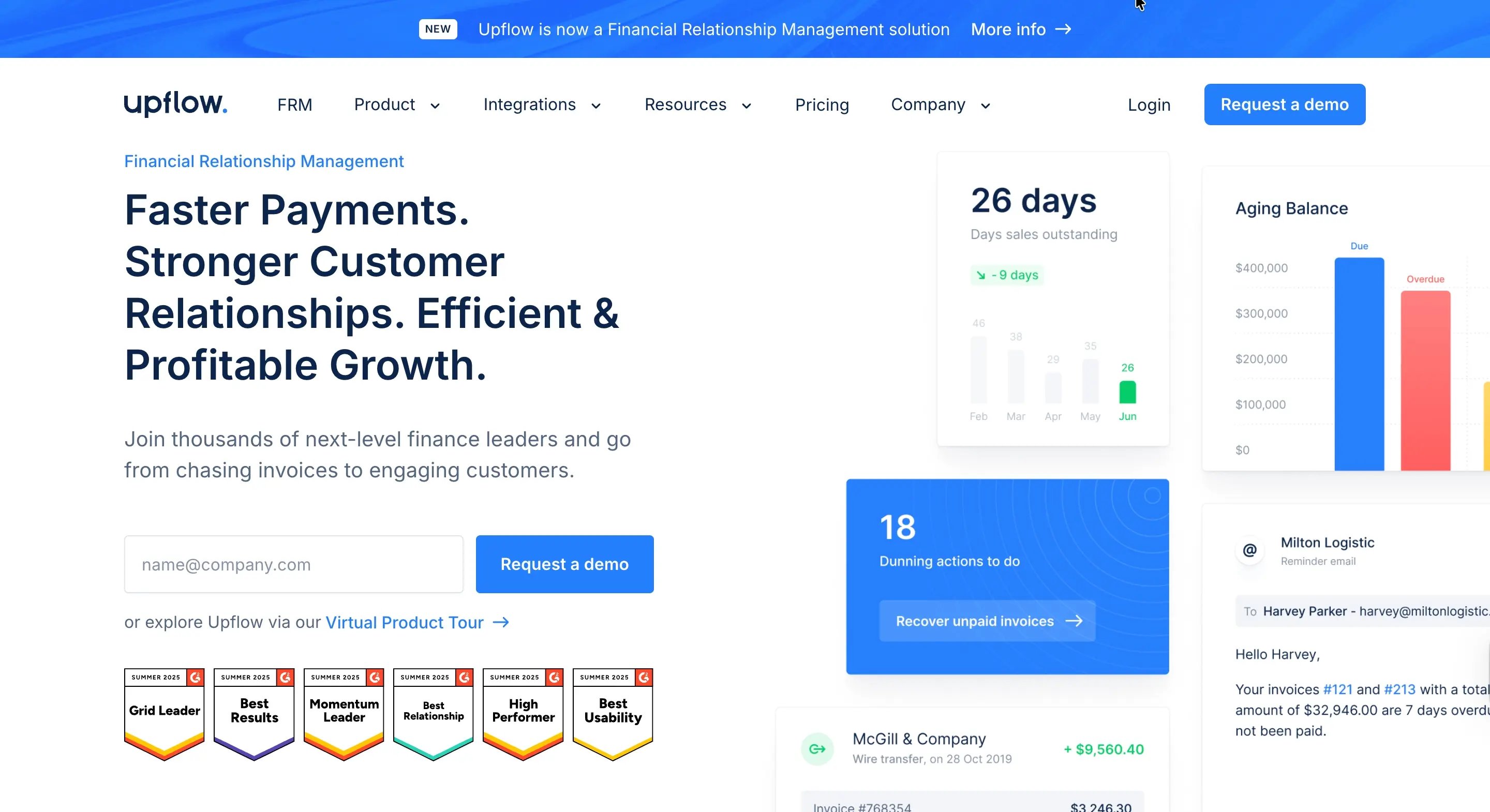
Upflow positions itself around Financial Relationship Management, a CRM-like approach to the finance-to-customer interface. Collection workflows run across email, SMS, calls, letters, and internal tasks, with every interaction logged in a single customer timeline that sales and CS teams can access without needing full AR permissions.
The cash flow forecast projects AR inflows for the next 90 days using historical billing cohort collection rates, which are useful for spotting cash gaps. But it covers AR inflows only and does not include AP, inventory, or other outflows. A permanently free Discover plan gives teams access to AR analytics and peer benchmarking before committing to a paid tier. If you are looking for Upflow alternatives you can check our comparison post.
Upflow key features
- Multi-channel collection workflows across email, SMS via Twilio, calls, letters, and internal tasks, each configurable by customer segment
- Centralized customer timeline covering all communications, disputes, and promise to pay commitments in one view
- AI-powered cash application with a self-improving matching model that handles incomplete or mismatched remittances
- Branded payment portal with autopay and direct debit via GoCardless and card payments via Stripe Connect
- AR analytics covering DSO, CEI, aging balance, at-risk rate, and collection-rate-based cash flow forecasting
- Free Discover plan with permanent access to analytics and benchmarking, no payment details required
- Upflow AI (early access): AI-suggested invoice disputes and Promise to Pay, in active development and not yet generally available
Upflow pros
- Free tier lets teams prove ROI before committing to a paid plan
- Cross-functional visibility is a genuine differentiator for businesses where sales or CS own customer relationships
- SOC 2 Type 2 certified; SecurityScorecard 'A' rating
Upflow cons
- Reporting and dashboard customization flagged by multiple G2 reviewers as rigid for non-standard data slices
- No documented third-party collections handoff
- Cash flow forecasting is collection-rate-based within the analytics module, not a standalone forecasting product
Upflow pricing
Upflow's pricing is structured around ARR, with four tiers and a permanently free Discover plan for teams that want to explore the analytics before committing.
Upflow reviews
4.5/5 (15 reviews) (Capterra)
Users highlight ease of implementation and improved visibility into overdue accounts as consistent positives. The most recurring criticism is limited reporting flexibility for teams that need custom data slices.
3. Quadient AR
Best for: B2B mid-market and enterprise finance teams processing high invoice volumes who need a complete O2C suite with broad ERP and multi-entity support.
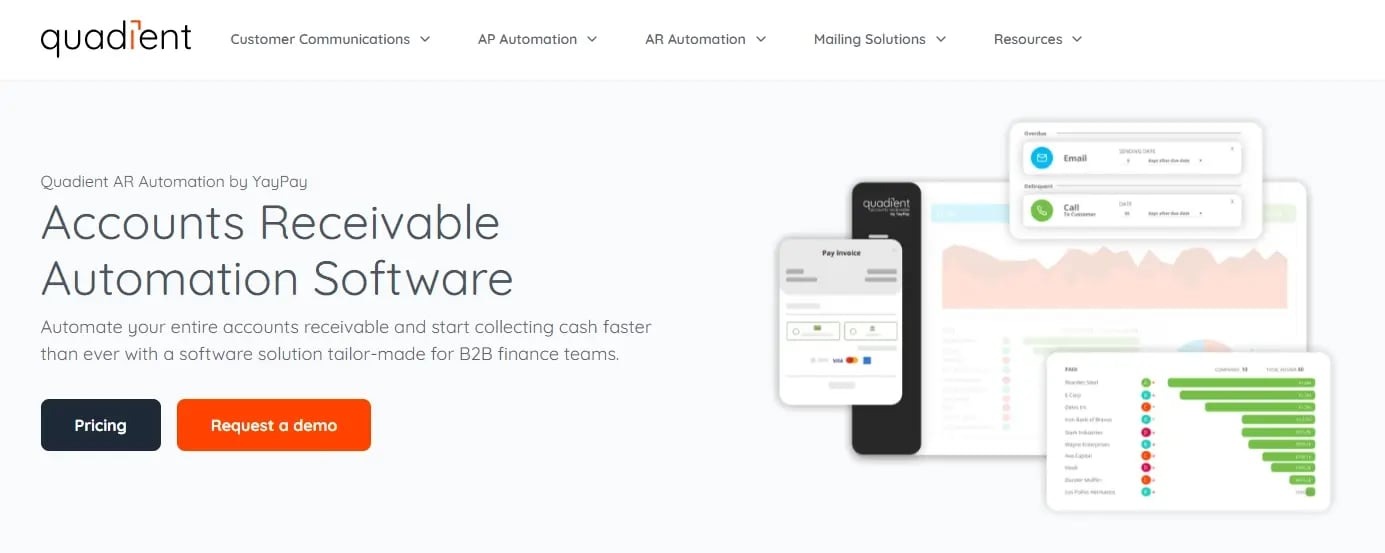
Quadient AR covers the full order-to-cash cycle in a single platform, from credit management through to cash application.
Credit scoring draws on Creditsafe and Dun & Bradstreet data, invoice delivery runs across EIPP portals, email, postal mail, and SMS, and the analytics module includes ML-based cash flow forecasting. Multi-currency and multi-entity management make it viable for international and multi-subsidiary businesses, and unlimited users are included on all plans.
Quadient AR key features
- Credit management with Creditsafe and Dun & Bradstreet integration for real-time credit scoring and limit monitoring
- Multi-channel invoice delivery across EIPP portals, email, postal mail via global print partners, and SMS
- Configurable dunning workflows with Promise to Pay tracking and a centralized AR inbox
- PCI-DSS compliant payment portal supporting credit card, ACH, autopay, payment scheduling, and multicurrency collection
- ML-powered cash flow forecasting with vendor-stated 94% accuracy, not independently verified
- AI-powered cash application with remittance-to-invoice matching, cited as a differentiating capability by QKS Group in the 2025 SPARK Matrix
- SPARK Matrix Leader 2025 (QKS Group); IDC 2025 SaaS AR Customer Satisfaction Award
Quadient AR pros
- Full O2C suite from credit management to cash application, broader than any pure AR automation tool in this comparison
- Consistently described as intuitive across G2, Capterra, and Gartner, even for new team members
- Multi-entity and multi-currency support from a single platform
Quadient AR cons
- Customer support responsiveness is rated inconsistently across reviews
- Cross-subsidiary reporting requires navigating between subsidiary views with no confirmed universal single-view
- ML forecasting draws on historical payer behavior patterns, not live collections activity
Quadient AR pricing
Quadient AR offers custom quote-based pricing depending on team size, invoice volume, and preferred modules.
Quadient AR reviews
4.5/5 (33 reviews) (Capterra)
Reviewers praise Quadient’s ease of use and the breadth of automation as the platform's strongest points. Where it falls short is in support responsiveness when complex issues come up, according to multiple reviewers.
4. Gaviti
Best for: Mid-market and enterprise B2B businesses running non-standard, legacy, or multiple ERPs, including on-premise systems, that want a modular AR platform they can adopt in phases, with payment forecasting included in the standard dashboard.
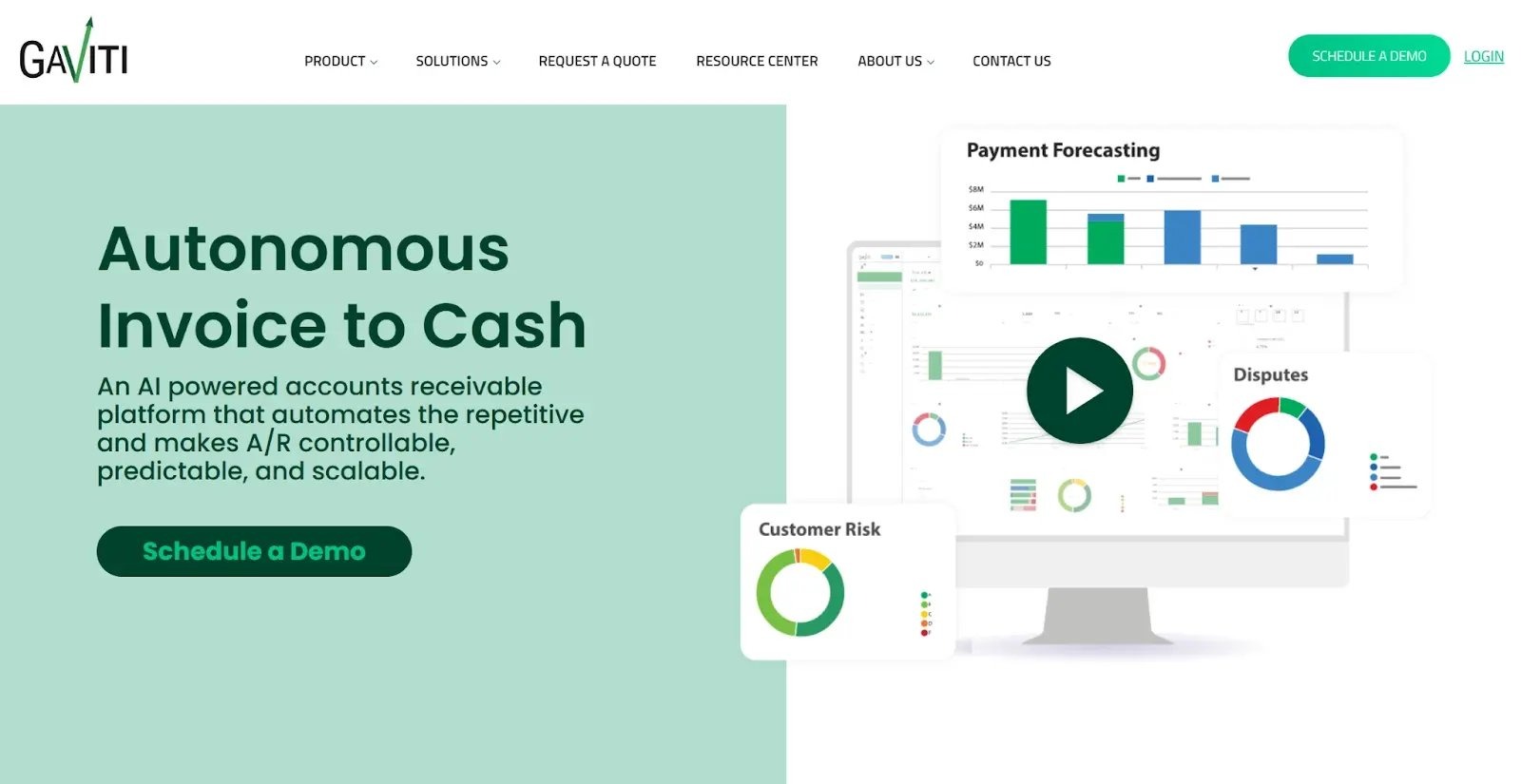
Gaviti is an AI-powered, modular invoice-to-cash platform designed to connect to any ERP system, cloud, or on-premise, without requiring custom development. Multiple ERP connections can run simultaneously, making it well-suited to multi-subsidiary businesses that run different systems across entities. Modules covering Collections, Cash Application, Disputes, and Credit Management can be purchased individually or in combination, allowing teams to start with what they need and expand later.
Gaviti key features
- Multi-ERP support for teams running simultaneous connections to multiple cloud and on-premise systems
- AI-powered collections workflows with intelligent prioritization based on payment history, customer creditworthiness, and outstanding amount
- Payment forecasting inside the AR dashboard uses customer risk scores, payment history, and DSO trends to predict when individual invoices are likely to be paid
- Customer self-service portal supporting credit card, zero-fee ACH, electronic wallets, and autopay via BlueSnap and Stripe
- Dispute management and deductions module with centralized tracking, coding, routing, and full audit trail
- Credit management with real-time credit scoring and limit monitoring
- Gaviti AI Copilot is included across all modules at no additional tier cost
- ISO 27001:2013 and ISO 27701:2019 certified; SOC 2 compliant
Gaviti pros
- ERP-agnostic architecture supports the broadest range of accounting systems on this list, including on-premise and custom ERPs
- Modular pricing lets teams adopt in phases and align costs to actual needs
- Zero-fee ACH on every plan removes transaction costs for bank transfer payments
- All plans include unlimited users and workflows
Gaviti cons
- Slow performance under heavy load is the most cited limitation across G2 and Capterra, with Gaviti's team publicly acknowledging the issue
- Dispute and partial payment scenarios often require manual follow-up outside the platform
- Advanced reporting lacks flexibility for custom views beyond the standard dashboard
- G2 data puts average implementation time at 4 months, with a 9-month average time to ROI. Factor this into your evaluation timeline
Gaviti pricing
Gaviti's pricing is module-based with no per-user cost.
Gaviti reviews
4.5/5 (91 reviews) (Capterra)
Ease of use and the flexibility of the collections automation are reviewers’ favorite features. The most recurring criticism is platform performance under load, particularly for teams with high concurrent usage.
5. Invoiced
Best for: Mid-market B2B finance teams with high transaction volumes, recurring revenue models, or subscription billing needs who want a fast implementation timeline and a strong API for custom integration. It is the established AR platform with subscription billing and CashMatch AI.
Invoiced is a cloud-based AR automation platform covering billing, collections, payment acceptance, cash application, and analytics. It now operates as part of Flywire Corporation following an acquisition in August 2024. After the acquisition, Invoiced migrated payment processing to Flywire's gateway, a transition that affected customers with existing payment profiles and generated the most concentrated negative reviews in Invoiced's G2 history.
If your team relies on recurring autopay with stored payment methods, verify the current payment landscape at invoiced.com before committing. The platform includes CashMatch AI for automated payment matching, a Cash Collections Forecast view, and subscription billing management as a named capability.
Invoiced key features
- CashMatch AI for automated payment matching, handling partial payments, multi-channel sources, and complex remittance formats
- Cash Collections Forecast uses ML across invoices, autopay records, payment plans, promises-to-pay, and customer history to predict when payments will arrive. The inclusion of autopay and committed promises makes it more forward-looking than purely historical models
- Subscription billing management is explicitly listed as a G2 product category
- Customer payment portal with autopay via Flywire's gateway; verify current payment method options from invoiced.com before publishing
- Native accounting integrations with QuickBooks, Sage Intacct, Xero, and Microsoft Business Central
- Well-documented API cited by technical G2 reviewers as a specific strength for custom integrations
- 1-month average implementation time based on G2 data, the fastest in this comparison
- G2 Summer 2025: Grid Leader, Easiest to Use Mid-Market, Fastest Implementation Mid-Market, Best Estimated ROI Mid-Market
Invoiced pros
- Fastest implementation in this comparison at 1-month average based on G2 data
- CashMatch AI handles complex remittance scenarios that simpler matching tools struggle with
- Subscription billing is a named product capability, uncommon in dedicated AR automation tools
- Strong API supports custom integrations and embedding Invoiced into internal systems
- Cash Collections Forecast is a properly named feature, not a dashboard summary. Forward-looking inputs like autopay records and promises-to-pay mean it reflects committed cash as well as historical patterns
Invoiced cons
- The Flywire acquisition forced a payment processor migration that removed stored payment profiles without warning, generating multiple 0-star G2 reviews from long-term customers; verify current status before writing
- Customer support responsiveness declined post-acquisition, per multiple G2 reviewers
- Reporting customization is limited for deep drill-down; granular analysis typically requires data export
Invoiced pricing
Invoiced does not publish standard pricing. Expect to engage the sales team for a quote.
Invoiced review
4.7/5 (149 reviews) (Capterra)
Across Capterra, reviewers highlight ease of use, automated reminders, and the collections forecasting view as consistent strengths. The Flywire payment migration is the most prominent negative signal in recent reviews, particularly among customers who relied on stored payment profiles and recurring autopay.
6. HighRadius
Best for: Large and global enterprises running SAP, Oracle, Dynamics, or NetSuite who need an agentic AI platform spanning collections, cash application, deductions, credit management, EIPP, and treasury, with 50+ ERP integrations, enterprise compliance coverage, and a 3–6 month go-live timeline.
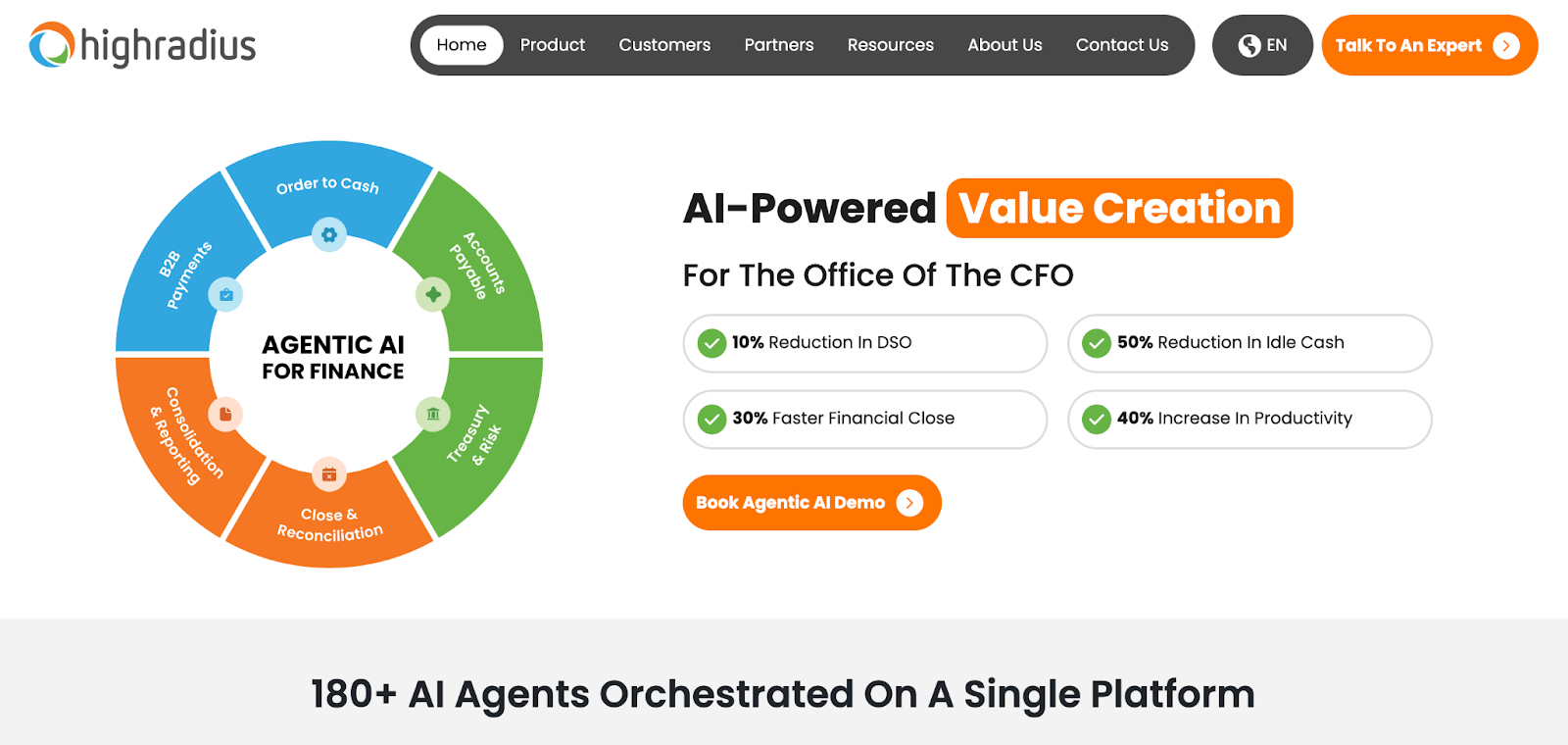
HighRadius is the enterprise AI platform for the full office of the CFO. It covers Order-to-Cash, Close and Reconciliation, Accounts Payable, B2B Payments, and Treasury and Risk. The O2C suite runs AI agents across collections management, cash application, deductions management, credit cloud, and EIPP, covering e-invoicing compliance in 30+ countries. Cash application is vendor-stated at 90%+ straight-through processing. More than 1,100 enterprises globally use the platform, including 3M, Unilever, and Red Bull.
HighRadius key features
- AI-driven collections management with predictive prioritization, automated dunning, promise-to-pay tracking, and parent-child customer hierarchy support
- Cash Application with 11 AI agents, with a vendor-stated 90%+ item automation rate, handling complex remittance scenarios including MICR numbers, multi-format files, and parent-child matching
- EIPP covering delivery to 20+ AP portals, e-invoicing compliance in 30+ countries, and credit card processing in 30+ currencies across 40+ processors
- Deductions management, where AI predicts deduction validity and auto-match algorithms support research and resolution
- Credit Cloud with integrations to CreditSafe, Experian, Equifax, and Dun and Bradstreet
- Gartner Magic Quadrant Leader for Invoice-to-Cash (three consecutive years)
- Dedicated AR cash flow forecasting with scenario analysis and variance analysis sits within HighRadius's Treasury and Risk Cloud, a separate product from the O2C suite, with vendor-stated 95% accuracy at the individual invoice level
HighRadius pros
- Deepest cash application capability in this comparison: 11 AI agents, enterprise remittance complexity, and bank lockbox elimination
- Unmatched analyst coverage: Gartner MQ Invoice-to-Cash Leader (3x), IDC Major Player for Treasury and Risk, IDC Leader for Embedded Payments
- EIPP breadth across 30+ countries and 40+ processors, unmatched for global enterprise invoicing
- SOC 1 Type 2, SOC 2 Type 2, GDPR, HIPAA, and PCI DSS compliant
HighRadius cons
- Average implementation time of 8 months and ROI timeline of 16 months (G2), the longest in this comparison by a significant margin
- Several users complain about poor customer support on G2. Annual CSM reassignment, inconsistent responsiveness, and slow escalation are recurring complaints
- Enterprise-only pricing and ERP architecture (SAP, Oracle, Dynamics), structurally unsuited to teams on Xero or SMB accounting software
- Platform complexity means under-configuration is a real risk. Reviewers note they could have extracted more value with better implementation support
- Dedicated AR forecasting capability sits in the Treasury and Risk Cloud, not the O2C suite. Teams evaluating HighRadius primarily for AR automation should confirm which modules include forecasting before committing
HighRadius pricing
HighRadius is quote-based with enterprise positioning. There is no free trial available.
HighRadius reviews
4.4/5 (13 reviews) (Capterra)
Reviews cite cash application depth and ERP breadth as standout strengths. The most-cited friction points are implementation complexity, support responsiveness, and a long timeline to measurable ROI.
Which AR automation software is right for you?
The right tool depends on what's driving your AR problem.
If your main problem is manual collections making your cash forecast unreliable, choose Chaser. It fixes the forecast at its source, automating collections, predicting late payers, and building the cash view from live AR data rather than payment terms. Learn more about how to reduce DSO and what that means for cash flow predictability.
If you want to make payment collection a company-wide activity, consider Upflow. Its Financial Relationship Management approach is purpose-built for cross-functional collaboration between finance, sales, and CS, with a permanent free plan to prove ROI before committing. Best for SaaS and tech-forward businesses on NetSuite, Sage Intacct, or Xero.
If you need a full order-to-cash platform, consider Quadient AR. It covers the entire O2C cycle in a single platform, with ML-powered forecasting and strong ERP compatibility. Best for mid-market and enterprise teams with high invoice volumes and international or multi-subsidiary structures.
If you're running multiple ERPs, legacy systems, or on-premise software, consider Gaviti. Its modular architecture connects to any ERP, cloud, or on-premise, and lets you adopt in phases. Best for businesses with non-standard or complex ERP environments.
If you have subscription billing or recurring revenue alongside standard AR, consider Invoiced. Subscription billing is a named product capability, and CashMatch AI handles complex payment matching scenarios. Best for recurring-revenue businesses wanting a fast implementation. Verify current payment processor options given the Flywire acquisition.
If you're an enterprise running SAP, Oracle, or Dynamics, choose HighRadius. It covers the full AR cycle at enterprise scale, with AI agents, 50+ ERP integrations, and the deepest cash application capability in this comparison. Expect 8 months to implement and 18 months to ROI.