

















.svg.png?height=48&name=Zoho_CRM_(application).svg.png)







Most finance teams treat the cash flow statement as a reporting output. You produce it after the period closes, check it balances, and file it. That framing stops well short of what the analysis can actually do.
The statement is most useful as a diagnostic input. The analysis only earns its time if it ends somewhere actionable: specifically, a forward-looking forecast built on patterns you've already measured rather than assumptions you've had to invent.
That's the argument this guide makes. It assumes you already know what a cash flow statement is and won't re-explain the cash versus profit distinction.
What it will do is show you how to read the three sections of a statement as a combined picture rather than three separate figures. You’ll learn how to interpret what different patterns actually signal, and how to turn those findings into a forecast that reflects how your business actually behaves, not how you hope it will.
The receivables line is where that last point becomes most concrete.
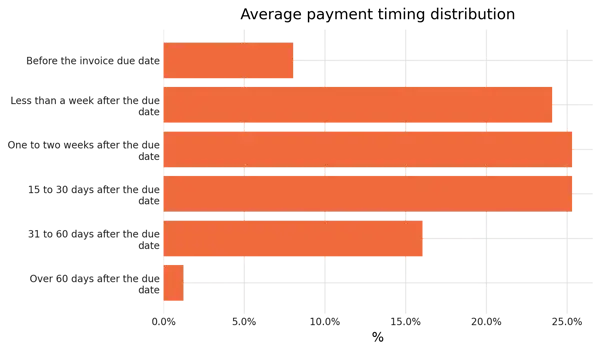
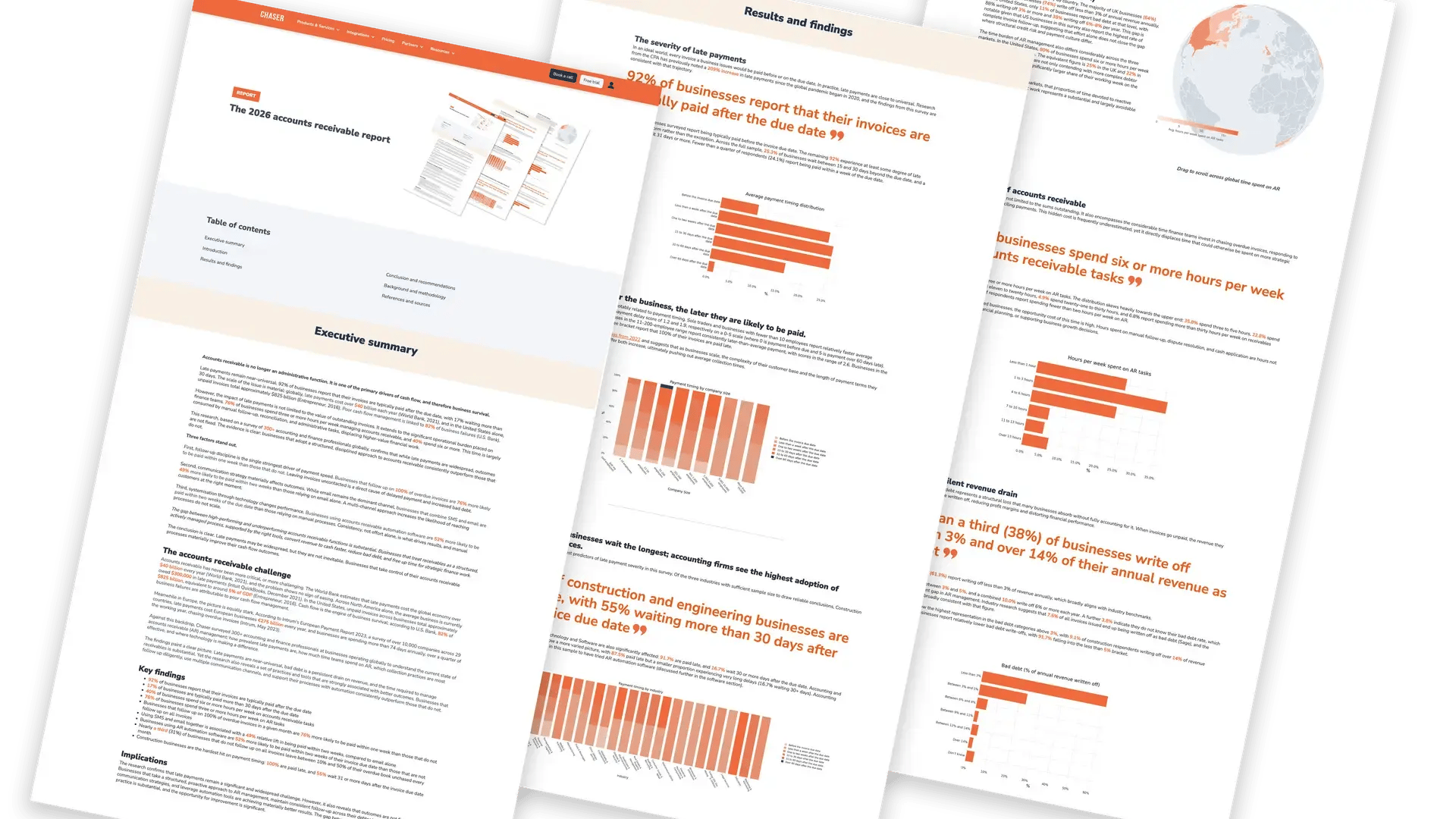
In most B2B businesses, it's the variable with the most available data and the least reliable projection. Chaser's 2026 AR Report found that 92% of businesses are paid after the invoice due date, and that the gap between revenue recognition and cash receipt is where most operating cash flow pressure originates. Manual projection of when that cash will actually land is prone to optimistic assumptions but aren’t realistic.
A cash flow analysis that stops at the statement and never feeds into a forecast is only doing half its job. This guide covers how to do the full job.
Choosing the right method before you start
Most guides treat direct and indirect methods as equivalent alternatives, leaving you to decide. Here's a clearer take.
The indirect method is what your accounting system already produces. It starts from net income and works backward through non-cash adjustments and working capital changes. It's the right choice for formal reporting, external stakeholders, audits, and board packs. If your finance function is producing a formal cash flow statement, indirect is almost certainly what you're using, and that's correct.
The direct method tracks actual cash inflows and outflows as they happen: cash received from customers, cash paid to suppliers, cash paid for wages. It gives a more granular picture of what cash is doing each week.
Use indirect for your formal statement. But when you're trying to understand where cash pressure is coming from in a particular week, or when you're building a 90-day forecast, think in direct-method terms. Instead of adjusting from net income, track actual receipts and payments. Most B2B finance teams already do this informally. They just don't frame it that way.
How to perform a cash flow analysis
The steps to performing a cash flow analysis aren't complicated. Where experienced practitioners run into trouble is the non-cash adjustments that get missed and the working capital movements that get reversed incorrectly. This section addresses both issues.
1. Gather the right documents
A cash flow statement alone isn't enough for a thorough analysis. You'll also need the income statement to verify your starting net income figure and the balance sheet to check your closing cash position. Most accounting systems let you export all three together, so this step is usually quick. The diagnostic work in the sections ahead depends on having all three documents.
2. Prepare the operating section
The operating section is where most statement errors originate, and almost all of them come from two specific scenarios.
The first is incomplete non-cash adjustments. Depreciation, amortization, and deferred taxes need to be added back to net income in the indirect method because they reduce profit without moving cash. Skipping or partially applying these adjustments understates operating cash flow before you've even reached the working capital section.
The second trap is mishandling working capital changes, particularly accounts receivable. An increase in accounts receivable is a use of cash, not a source. Revenue was recognized, but the cash hasn't arrived. Treating it the other way is one of the most common reasons a statement won't balance.
3. Complete the investing and financing sections
Investing and financing sections are generally more straightforward to populate than operating. A large investing outflow isn't automatically a warning sign. If operating cash flow is strong and the financing section shows the debt taken on to fund that investment, the picture may be entirely healthy. Context from the other two sections is what gives each figure meaning. The free cash flow formula breaks down how this plays out across sections in more detail.
4. Calculate the net change in cash and reconcile
Add the net cash from operating, investing, and financing activities together. The result is your net change in cash for the period. Add that figure to your opening cash balance and it should equal your closing cash balance. That closing balance must match the cash line on your balance sheet exactly. If it doesn't, something in the statement is wrong.
The net cash flow guide covers the calculation in more detail if needed.
5. Set the time period context
One period of cash flow data gives you figures with no baseline to compare against. It doesn't tell you whether that's normal, improving, or deteriorating. Three or more consecutive periods is where you can tell the difference between a one-off and a pattern, and where the interpretation in the next section becomes most useful.
How to interpret what your cash flow analysis is telling you
1. Positive operating, negative investing
Cash is being generated by core operations and redeployed into long-term assets. In a growing B2B business, this is usually the picture you want to see. The distinction that matters is whether the investing outflow is funded by operating cash or by new financing.
If operating cash fully covers capex with room for working capital, you have a healthy growth signal. If accounts receivable is also growing quickly, watch for liquidity risk building underneath an otherwise clean headline.
What determines whether this is a growth signal or a leveraged bet is whether the investing outflow is funded by operating cash or by new financing.
2. Positive operating, negative financing
Cash from core operations is being used to pay down debt, meet lease repayments, or return capital. This is a financial strength signal.
The risk is that aggressive repayment schedules leave insufficient headroom for working capital, payroll, or tax. Check whether operating cash is comfortably ahead of both financing outflows and day-to-day needs before treating this pattern as unambiguously positive.
Is the rate of debt reduction sustainable alongside day-to-day operating needs?
3. Negative operating, positive financing
This is the pattern that should trigger the most scrutiny. Cash is leaving through core operations and being replaced by new loans or equity. Funding is covering an operating gap. The income statement may show positive cash flow, while the cash flow statement reveals the structural problem underneath.
Short periods can be acceptable during a planned scale-up or a known one-off shock. Confirm the causes are temporary and already corrected in subsequent periods. In B2B, rising receivables and lengthening collection times often sit behind this pattern. Profit can look fine while cash deteriorates because customers are taking longer to pay. If financing inflows keep rising simply to offset slow collections, that's a structural problem.
How many periods can current facilities sustain this burn rate? That’s the number that matters most.
4. Positive investing alongside negative operating
Cash is coming in from asset disposals while core operations consume cash. Occasionally, this is strategic. But when disposal proceeds are used to plug recurring operating gaps, the business is liquidating its balance sheet to stay afloat.
Isolate whether the investing inflow is a one-off or part of a sequence. Then check whether operating cash flow is recovering in subsequent periods or remaining negative.
In B2B, this pattern often appears alongside stretched receivables. Reviewing an accounts receivable aging report in parallel can show whether slow collections are forcing decisions that could otherwise have been avoided.
Is this a strategic disposal or a survival move?
Reading across multiple periods
One negative operating period is not automatically a crisis. It might reflect a seasonal trough, a large payables payment, or a timing issue with receivables. A consistent pattern across three or more periods is a structural warning which should feed directly into your balance sheet forecasting.
The receivables connection
In most B2B businesses, the most common source of operating cash flow pressure is collections, not cost. Revenue is recognized on invoice, but cash only arrives when the customer pays. And the gap between those two events is where the business is effectively lending money to its customers, whether or not it has the working capital to do so comfortably.
That's the mechanism behind the problem of profit on paper, but borrowing to pay bills. Tracking it through an accounts receivable aging report makes the pattern visible before it becomes a crisis. The next section covers what to do about it.
The levers you can pull to change the numbers
Operating cash flow levers
Start with receivables. In most B2B businesses, even a modest improvement in days sales outstanding releases meaningful working capital without changing revenue. Bringing DSO down by a few weeks effectively converts accounts receivable into cash. The larger the book, the bigger the release.
Tighten payment terms where commercially viable, enforce them consistently, and improve invoice accuracy so disputes don't stall payment. Structured reminder schedules and clear escalation paths move the dial without damaging customer relationships. Tracking a cash collections formula alongside DSO shows whether changes are working.
Docuflow's analysis pointed to receivables as the primary drag on operating cash flow. Working with FHC Accountants, they brought DSO from 60 to 24 days. That closed a 36-day gap between earning revenue and receiving it. For most B2B businesses, closing that gap is what separates a business that draws on its credit line from one that doesn’t.
On the payables side, negotiating more flexible payment schedules with suppliers extends how long cash stays in the business. Trade predictability and volume commitments for better terms rather than simply delaying payment. Then look at inventory: right-sizing reorder points and tightening the cash conversion cycle can free additional working capital without touching headcount or pricing.
Investing cash flow levers
Investing levers are about timing and structure, not just yes or no decisions. Capital expenditure can often be phased so that cash outflows better match operating capacity. Breaking a large program into stages, with go/no-go checkpoints tied to performance metrics, keeps you from committing cash too far ahead of validated returns.
Lease versus buy choices are another lever. Leasing critical equipment or software smooths cash outflows compared with an upfront purchase, though at a higher lifetime cost.
The trade-off is between liquidity and total spend, and the right answer depends on your runway and other calls on cash. Similarly, aligning the timing of asset disposals with planned investments or tight liquidity periods can avoid drawing on external funding unnecessarily.
Financing cash flow levers
When the financing section is doing the heavy lifting, the levers are about reshaping obligations rather than simply adding more. Refinancing short-term debt into longer tenors reduces immediate repayment pressure and smooths cash flow, provided the underlying business can support the structure. Renegotiating covenants, amortization profiles, or interest margins can also create breathing room without increasing headline borrowings.
Reducing reliance on revolving credit lines by stabilizing operating cash reduces risk and preserves capacity for genuine shocks. Where credit lines are unavoidable, match their use as closely as possible to seasonal working capital swings and build explicit plans for paying them down. Across all three sections, connect what the statement shows to a targeted set of levers, then test those changes in your forecast before implementing them.
Common mistakes that distort your cash flow analysis
1. Analyzing each section in isolation
A negative investing section, read alone, looks concerning. Read alongside strong operating cash flow, it's often a healthy growth signal because the business is investing its operational surpluses. A positive financing section looks reassuring until you see that operating cash flow has been negative for three consecutive quarters and financing is covering the gap. The sections only tell the full story together, which is exactly what the interpretation section above is built around. Tracking accounts receivable turnover as a supporting metric helps surface the working capital context that makes each section easier to read correctly.
2. Using a single period as the basis for conclusions
A single period tells you what happened in that window, nothing more. It might reflect a seasonal low, a large one-off payment, or an unusual timing coincidence. Three or more periods in sequence is where reliable conclusions come from. This is especially important for businesses with seasonal revenue cycles, where a single-period analysis can be genuinely misleading.
3. Missing non-cash adjustments in the indirect method
Depreciation, amortization, and deferred tax adjustments are where indirect method statements most often fail to balance. These items reduce net income but don't represent cash leaving the business.
They need to be added back in the operating section. Getting them wrong is a primary reason statements don't balance, and it requires careful attention each time, particularly in businesses where these figures change from period to period. Understanding why these adjustments exist comes down to the difference between cash and profit, which is covered in detail in cash flow definition and importance.
4. Treating the analysis as a one-time exercise
A cash flow analysis done quarterly and then filed produces a record. It doesn't produce insight. Trend data only exists if the analysis is done consistently, over time, with results compared against prior periods and projections. Without that, there's no ability to catch deteriorating patterns early and no basis for forecasting. The next section covers how to build that monitoring into an ongoing routine.
How to keep your cash flow analysis accurate and actionable over time
1. Cadence
Review your cash position weekly using direct-method thinking: what actually came in from customers, what went out to suppliers and payroll, and what is due in the next seven days. Run a full three-section analysis monthly.
Quarterly, benchmark your key ratios against prior periods and, where available, industry comparisons. That cadence turns cash flow analysis from a retrospective record into a forward-looking discipline.
2. Comparison discipline
When you compare actuals against what you projected in the prior period, you're not just checking accuracy. You're identifying which assumptions failed and why. If your receivables line was off by 20%, that gap reveals something specific about customer payment behavior that should sharpen the next projection.
Over multiple cycles, testing assumptions against outcomes is what progressively improves both the quality of your analysis and the reliability of your forecasts.
3. Operational indicators
Between monthly closes, two metrics move faster than a full three-section analysis: DSO and the cash conversion cycle. Both surface deterioration early enough to act on it. DSO tells you whether collections are slowing.
The cash conversion cycle shows how efficiently the business converts activity into cash. Rather than re-running the full statement every week, tracking these two as ongoing signals gives earlier warning with less effort.
Most accounting system integrations can automate the data collection behind them, which removes the manual effort that makes consistent monitoring hard to sustain. A broader set of AR KPIs worth tracking sits alongside these two as part of a consistent routine. Good accounts receivable management practices and the right cash flow management software keep both metrics current without requiring a full restatement each week.
How to turn your analysis into a into an actionable cash flow forecast
Most finance teams file the statement, close the period, and move on. The analysis gets treated as the end of the process when it's actually the most useful starting point they have.
A cash flow forecast built on completed analysis lets you project the next 30, 60, or 90 days from patterns you've already measured: how operations have performed, what investing commitments are in motion, and how financing obligations are scheduled. One approach lets you act before the shortfall arrives. The other leaves you reacting after it does.
In B2B forecasting, receivables are consistently the hardest line to project accurately. Payment behavior varies by customer, by invoice size, and by period, and manual projection of when cash will actually land is prone to optimistic assumptions that don't survive contact with reality Accounts receivable automation changes that.
Chaser tracks how customers actually pay over time and uses that behavioral data to generate a cash flow forecast automatically, connecting your analysis directly to a forward-looking projection.
Turn your cash flow analysis into a forecast that gives you the true picture of your finances and business.

FAQ